

Table of Contents
- Quick Comparison: What You Get at Each Price Point
- What Actually Drives the Price of Expensive Gym Clothes
- Durable Workout Clothes for Heavy Training: What to Look For
- Cost Per Wear Analysis for Gym Clothes: The Math That Matters
- How to Wash Athletic Wear to Prevent Odors and Extend Lifespan
- Gym-to-Street Versatility: One Wardrobe for Training and Office
- Environmental Impact and Sustainability in Premium Activewear
- Verdict: When Expensive Gym Clothes Are Worth It (and When They're Not)
- Frequently Asked Questions
Last Updated: September 30, 2026
Quick Comparison: What You Get at Each Price Point
Are expensive gym clothes worth it? For most people who train four or more times a week and wear their gear outside the gym, yes. The gap shows up in fabric recovery, seam construction, and how the garment looks after fifty washes, not in the fitting room mirror.
| Price Tier | Typical Price Range | Fabric Reality | Best For |
|---|---|---|---|
| Budget | Under $25 | Thin synthetic blends, basic stitching | Occasional workouts, backup pairs |
| Mid-Range | $25-$50 | Decent moisture-wicking, some stretch recovery | 2-3 sessions per week |
| Premium | $50-$90 | Dense knits, flatlock seams, tested recovery | Daily training, gym-to-office wear |
What Actually Drives the Price of Expensive Gym Clothes
Fabric cost, construction method, and brand positioning set the price of premium activewear. Marketing plays a role, but rarely the whole story.
Fabric Science: Why Synthetic Blends Cost More
Moisture-wicking fabric is a knit structure that pulls sweat away from your skin and spreads it across the surface to evaporate faster. That engineering costs money.
Construction Details That Signal Quality
Flatlock seams, gusseted crotches, and bonded hems separate durable workout clothes for heavy training from fast-fashion knockoffs, and they add labor cost per unit. Look for:
- Flatlock seams lie flat against the skin and resist abrasion from repeated movement
- Four-way stretch panels in high-flex zones (hips, shoulders, knees)
- Reinforced waistbands that don't roll or dig in
- Anti-microbial finishes that slow odor buildup between washes
Durable Workout Clothes for Heavy Training: What to Look For
Durability comes down to three measurable factors: fabric weight, seam construction, and elasticity retention. Heavier fabrics resist pilling and abrasion longer, flatlock seams survive high-tension movement better than overlock stitches, and higher elastane percentages hold their shape through repeated stretch cycles. For heavy training or HIIT, prioritize:
- Fabric weight of 5 oz/yd² or higher for shorts and leggings
- Elastane content above 20% for anything that needs to stretch and recover
- Abrasion-resistant weaves on the seat and inner thigh
- Anti-microbial treatment if you sweat heavily or train daily
Cost Per Wear Analysis for Gym Clothes: The Math That Matters
Cost per wear is purchase price divided by the number of times you actually wear the garment. A $68 pair of leggings worn twice a week for two years costs about $0.65 per wear; a $20 pair that pills after four months costs roughly $0.63, with worse performance the whole time.

Run the numbers before you decide.
| Item | Price | Wears/Week | Useful Life | Cost Per Wear |
|---|---|---|---|---|
| Budget leggings | $20 | 2 | 4 months | $0.63 |
| Premium leggings | $68 | 2 | 2 years | $0.65 |
| Budget t-shirt | $12 | 3 | 6 months | $0.15 |
| Premium t-shirt | $40 | 3 | 3 years | $0.09 |
How to Wash Athletic Wear to Prevent Odors and Extend Lifespan
Wash athletic wear in cold water, skip fabric softener, and air dry when possible. Understanding why separates gear that survives three years from gear that smells permanently after three months.
What Heat Actually Does to Elastane
Elastane (also sold as Lycra and Spandex) is a segmented polyurethane-urea copolymer: hard segments lock into physical cross-links while soft segments uncoil under tension. Heat accelerates hydrolysis of the soft segments, so a legging washed in hot water loses recovery before it loses color. Washed at 140°F weekly, it sags at the knees and seat within a season; washed cold, it lasts multiple seasons.
Why Fabric Softener Ruins Wicking
Moisture-wicking works because the fiber surface is engineered to be hydrophilic while the spaces between fibers move liquid by capillary action. Fabric softener deposits a cationic surfactant film that feels plush but turns the surface hydrophobic, killing capillary movement. Sweat then sits on the skin instead of evaporating, and bacteria feed on it.
The Real Cause of Permanent Gym Smell
Synthetic fibers (polyester, nylon, elastane) are oleophilic, they attract and hold oils. Sweat lipids and proteins bond to them more tightly than to cotton, and standard detergent leaves residue that accumulates in the fiber interior. Bacteria colonize that residue and produce volatile sulfur compounds and short-chain fatty acids. Once that biofilm establishes, ordinary washing stops working, which is why a shirt can smell clean out of the dryer and turn foul within minutes of warming up.
A Wash Routine That Actually Addresses the Mechanism
- Turn garments inside out. Most odor-causing residue sits on the skin-facing surface.
- Use cold water (below 86°F) on a gentle or hand-wash cycle. Heat is the primary destroyer of elastane.
- Use a detergent formulated for synthetics or one containing enzymes. Standard detergents are designed for cotton soils and underperform on the lipid-protein residue that builds up in performance fabrics.
- Skip fabric softener and dryer sheets entirely. Both deposit films that block wicking.
- Avoid overloading the machine. Synthetics need mechanical agitation and water flow to release trapped soil.
- Hang dry or tumble on the lowest heat setting. If you must use a dryer, remove garments while slightly damp.
- For persistent odor, soak in a diluted white vinegar solution (about one cup per gallon of cool water) for 30 minutes before washing. Vinegar helps break down the alkaline residue that holds odor compounds.
Anti-microbial finishes help but degrade over time and don't replace removing the soil bacteria feed on. The Men's Premium Tank Top at $38.95 is 100% combed ring-spun cotton at 5.5 oz/yd². Cotton tolerates heat better than elastane but holds odor-causing bacteria in the fiber lumen, so cold water and enzyme detergent still apply.
How Often to Replace vs. How Often to Wash
People often replace gear because of odor long before the fabric wears out. If a garment still smells after an enzyme wash and vinegar soak, the biofilm has penetrated the fiber and it's done for high-sweat use (it can still work for low-sweat activities). Tracking this separately from physical wear sharpens your cost-per-wear picture: a $70 legging that stays odor-free for two years beats a $25 legging replaced every four months because it smells.
Performance Moisture-wicking T-shirt →
Gym-to-Street Versatility: One Wardrobe for Training and Office
Versatile activewear works in both settings when the design stays minimal and the fabric doesn't look like performance gear. But the gym-to-street claim deserves scrutiny: features that make a garment good for training often conflict with those that make it good for the office.
The Construction Trade-Off Nobody Mentions
Performance construction prioritizes stretch, moisture movement, and durability under tension. Office-appropriate construction prioritizes drape, opacity, and a matte finish. These goals pull in different directions.
- High elastane content (20%+) gives the squat-proof stretch you want in the gym, but it also produces a clingy, body-hugging silhouette that reads as athletic rather than professional in most office settings.
- Dense, heavy knits (6 oz/yd² and up) resist sheerness and pilling, but they can look bulky under a blazer or button-down.
- Moisture-wicking finishes often leave a slight sheen or a slick hand-feel that is visible under office lighting.
- Flatlock seams are durable and comfortable, but the raised stitch lines can show through thin outer layers.
How Versatility Changes the Cost-Per-Wear Math
A single-purpose gym legging worn twice a week for two years gets roughly 208 wears. A dual-purpose piece worn twice a week for training plus twice a week for errands gets roughly 416 wears over the same period, halving cost per wear at the same purchase price. The premium tier becomes easier to justify not because the fabric is better, but because the wear count is higher.
An In-Store Checklist for Testing Versatility Before You Buy
Most shoppers evaluate activewear by how it feels on the hanger or in the fitting room mirror, which tells you almost nothing about performance after 30 washes or whether it looks appropriate outside the gym. Use these objective tests instead:
- The squat test. Squat deeply in front of a mirror under bright light. If you can see skin tone through the fabric at the seat or knees, the fabric is too thin for training and will only get thinner with wear.
- The seam-strength test. Grip the fabric on either side of a seam and pull gently perpendicular to the stitch line. A well-constructed flatlock seam will not gap or distort. A standard overlock seam will show visible holes between stitches.
- The recovery test. Stretch the fabric at the knee or hip, hold for five seconds, release, and watch how quickly it returns to shape. Slow recovery signals low-quality elastane or a low percentage of it.
- The light test. Hold the fabric up to a window or bright light. Uneven opacity (thin spots, visible pattern of the knit) predicts where the garment will fail first.
- The drape test. Drape the garment over your arm and look at how it falls. A matte, structured drape reads as everyday wear. A shiny, clingy drape reads as gym gear.
- The tag check. Look for elastane content above 15% for stretch pieces, fabric weight above 5 oz/yd² for leggings and shorts, and certifications like OEKO-TEX 100 if you care about chemical testing.
What to Look For in Dual-Purpose Pieces
- Solid colors with no large logos
- Clean seam lines and structured fits
- Fabrics with a matte, not shiny, finish
- Cuts that work with a jacket or button-down layered over them
- Mid-weight fabric (5-6 oz/yd²) that is opaque without being bulky
- Elastane content between 15% and 25% for stretch that recovers without clinging
If a piece passes the squat, seam, and drape tests, it is a legitimate dual-purpose candidate. If it fails any of them, it is a gym piece pretending to be versatile, and you should price it accordingly.
Environmental Impact and Sustainability in Premium Activewear
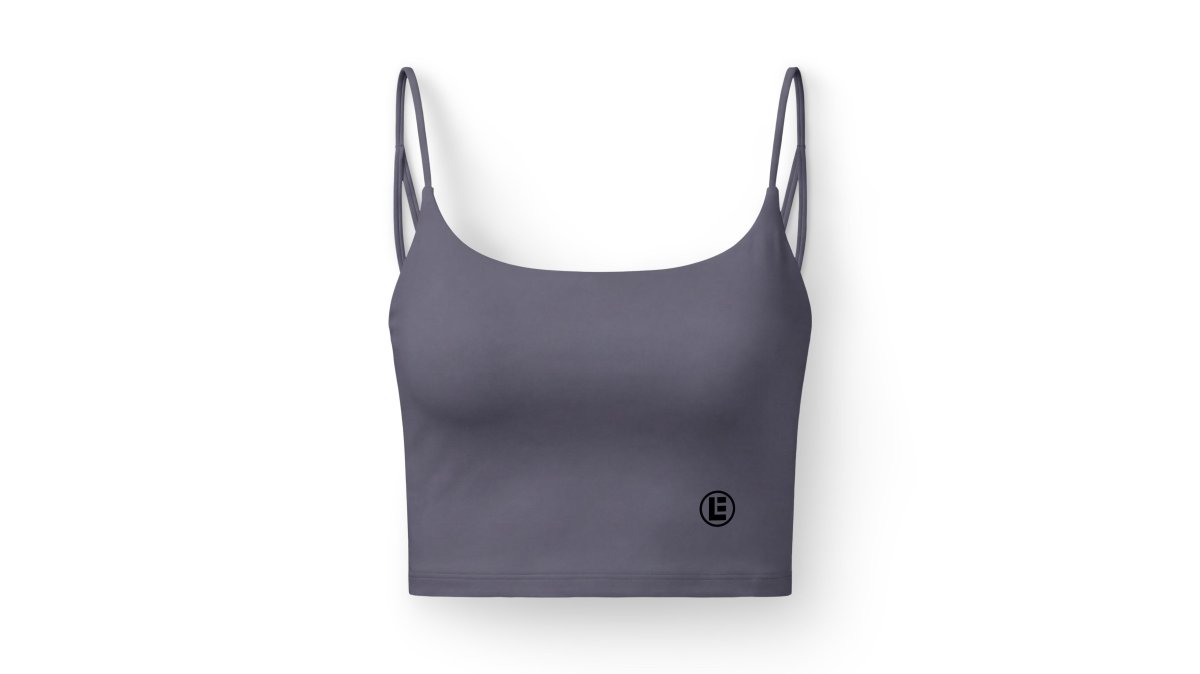
Recycled content and certified production standards are becoming more common in premium activewear, and they're a legitimate reason some garments cost more. The Performance Moisture-wicking Mesh Shorts (Unisex) use 100% recycled polyester with Global Recycled Standard and Recycled Claim Standard certification. The Women's Luxe Sports Bra and Women's Luxe Leggings each use 70% recycled nylon.


Verdict: When Expensive Gym Clothes Are Worth It (and When They're Not)
Expensive gym clothes are worth it when you train four or more times a week, wear your gear outside the gym, and plan to keep pieces for two years or longer. They're not worth it if you work out once a week, prefer rotating through many cheap options, or haven't figured out what fit and fabric you like.
The decision comes down to three questions:
- How often will you wear it? Higher frequency lowers cost per wear
- What conditions will it face? Heavy sweat, high-intensity training, and daily washing demand better construction
- Will it cross over into your regular wardrobe? Versatility multiplies wear count
Frequently Asked Questions
Do expensive gym clothes last longer than budget options?
They often do, but it depends on construction and fabric. Premium pieces typically use tighter-knit synthetic blends, reinforced seams, and better elasticity that resist pilling and stretching. A $70 legging worn 100 times costs $0.70 per wear, while a $25 pair that loses shape after 20 washes costs $1.25 per wear. The key is checking for durable workout clothes for heavy training, like four-way stretch and flatlock seams, rather than assuming price alone guarantees longevity.
How do I wash athletic wear to prevent odors?
Turn garments inside out and wash in cold water with a sport-specific detergent. Avoid fabric softener, which coats fibers and traps bacteria. Skip the dryer; hang dry to protect elasticity and moisture-wicking properties. Wash immediately after heavy sweat sessions, and use a vinegar rinse monthly to break down residue. This routine keeps anti-microbial finishes working and extends garment life, making expensive gym clothes a better investment over time.
What features should I look for in high-performance athletic wear?
Focus on moisture-wicking fabrics, breathability, and four-way stretch. Check for flatlock or bonded seams that reduce chafing, and look for anti-microbial treatments. For heavy training, prioritize abrasion resistance and fit retention. A cost per wear analysis for gym clothes helps: divide price by estimated wears. A $68 legging worn twice weekly for two years costs about $0.65 per wear, often beating cheaper alternatives that need frequent replacement.
Is there a noticeable difference in fabric technology between price points?
Yes, especially in how fabrics handle sweat and movement. Budget options often use basic polyester that feels clammy and holds odor. Premium pieces blend synthetic fibers with elastane for elasticity and use advanced moisture management. For example, 70% recycled nylon with 30% elastane offers a second-skin fit and better recovery. These differences show up in breathability, thermal regulation, and how the garment feels after 50 washes.
How do you properly care for premium athletic apparel to extend its lifespan?
Wash less often when possible, and always in cold water on a gentle cycle. Use a mesh laundry bag to prevent snags. Avoid high heat in the dryer; air dry flat or hang. Store folded rather than hung to preserve shape. Rotate between several pieces to give fabrics time to recover elasticity. These habits protect seam construction and fabric recovery, helping expensive gym clothes deliver the durability you paid for.