

Last Updated: November 9, 2026
Quick Summary
The best alternatives to bulky gym hoodies are lightweight breathable hoodies, sleeveless workout hoodies, zip-up hoodies, and non-hoodie layers like long-sleeve tech tees, quarter-zips, removable-sleeve tops, and tanks. Check fabric weight in GSM and the knit type, since a midweight open knit vents heat better than dense heavyweight fleece.
- Heavyweight fleece sits at 320+ GSM, or roughly 9.4+ oz/yd², and traps heat once you sweat.
- For warm-ups in an open knit, target 180-240 GSM; use 240-300 GSM for a mid-session layer.
- Sleeveless hoodies free the shoulder for overhead work but leave arms exposed in a cold gym.
- Buy your true size in a zip-up; sizing up throws off the shoulder line and lets the zipper pull.
- A long-sleeve tech tee in 150-200 GSM with at least 5% spandex is the closest swap for a light hoodie.
Table of Contents
- Why Bulky Gym Hoodies Hold You Back
- Lightweight Gym Hoodies That Breathe
- Sleeveless Workout Hoodies for Full Range of Motion
- Zip-Up Workout Hoodies for Layering Control
- Fabric Weight and GSM: The Spec That Decides Bulk
- Mobility-Focused Design: Fit, Stretch, and Ventilation
- Non-Hoodie Alternatives for Temperature Regulation
- Building Your Gym-to-Office Rotation with EVENLIFT
- Frequently Asked Questions
Why Bulky Gym Hoodies Hold You Back
A heavy hoodie feels great on the drive to the gym. Ten minutes into a warm-up, it becomes a wet blanket. The fabric traps heat, the sleeves bunch at your wrists, and the hood slides into your line of sight during overhead work. At EVENLIFT, we build training gear around one idea: clothing should support the session, not fight it. That is the whole case for the best alternatives to bulky gym hoodies, and it comes down to three problems.
Problem one: trapped heat. A heavyweight cotton fleece holds warmth and moisture against your skin. Once sweat saturates the fabric, it stops breathing and starts weighing you down.
Problem two: restricted movement. Dropped shoulders and thick cuffs limit overhead reach. If the hoodie rides up during a press, you spend the set adjusting instead of lifting.
Problem three: no exit ramp. A pullover has to come off over your head, mid-session, often while you are already sweating. Zip designs and lighter layers solve this.
Below, we break down seven alternatives by category, with the fabric specs and fit details that actually decide whether a piece works under a barbell. But first, here is the mistake most guides make: they rank hoodies by brand instead of by construction. Fabric weight and cut matter more than the logo.
Lightweight Gym Hoodies That Breathe
The fix for overheating is not "buy a thinner hoodie." It is buying one with a lighter fabric density and a looser weave. Lightweight gym hoodies typically sit well below the heavy fleece you find on streetwear racks, and that difference shows up the moment you start moving.
Look for three things:
- Lower fabric weight. Anything in the light-to-midweight range moves air instead of trapping it.
- A breathable knit. Open weaves vent heat; dense fleece does not.
- A relaxed cut. Room through the chest and shoulders lets air circulate.
If you want a concrete option to shop, our Unisex Essential Organic Hoodie is the lighter pick in our lineup, built for breathability rather than bulk. For a deeper roundup of breathable picks across lifting days, see our guide to breathable training gear for heavy lifting.
Watch out: a "lightweight" label means nothing without a number. Ask for the fabric weight before you buy.
Sleeveless Workout Hoodies for Full Range of Motion
Sleeveless workout hoodies solve the mobility problem outright. With no sleeve to bind the shoulder, your arm travels through its full arc on presses, pulls, and overhead work. The hood stays for warmth at the neck and ears; the arms stay free.
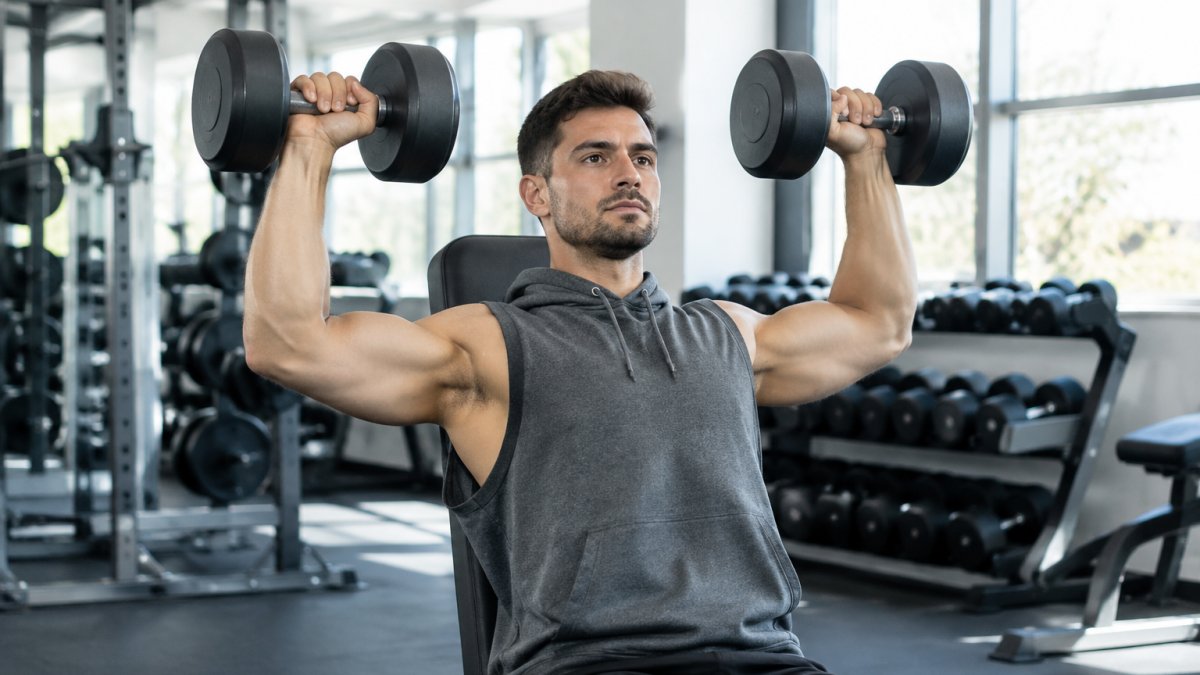
What to check before buying:
- Armhole depth. A deep, clean armhole prevents chafing at the armpit during high-rep work.
- Shoulder seam placement. Seams should sit on the shoulder, not pull toward the neck.
- Hem length. A hem that hits at the hip stays put during hinges and rows.
The trade-off is coverage. Sleeveless designs leave your arms exposed in a cold gym, so they work best as a mid-session layer rather than a warm-up piece. For lifters who run hot, that is exactly the point.
Zip-Up Workout Hoodies for Layering Control
Zip-up workout hoodies give you the one thing a pullover cannot: an adjustable layer. Unzip during a hard set, zip back up between movements, and skip the awkward over-the-head removal entirely. That control is why zip designs dominate warm-up and post-workout recovery.
The construction details that matter:
- A full-length zipper that runs cleanly to the collar, so you can open the front fully.
- A funnel neck or stand collar to hold warmth at the throat when zipped.
- Ribbed cuffs and hem to keep the fit close without restricting movement.
Our Unisex Fleece Zip Up Hoodie is built for exactly this: adjustable layering you can open and close as your body temperature shifts. A common mistake is sizing up for "roominess" in a zip piece. That throws off the shoulder line and lets the zipper pull. Buy your true size.
Fabric Weight and GSM: The Spec That Decides Bulk
Fabric weight is the single number that separates a bulky hoodie from a training-ready one. It is measured in grams per square meter, or GSM, and it tells you how dense and heavy the cloth is before you ever touch it. American tags often list the same spec in ounces per square yard (oz/yd²), so you need both numbers to compare across brands. The conversion is simple: 1 oz/yd² equals roughly 33.9 GSM. A 10 oz/yd² fleece is about 339 GSM, squarely in heavyweight territory.
Here is how the ranges break down for training gear:
| Fabric Weight | GSM | Approx. oz/yd² | Best For | Trade-off |
|---|---|---|---|---|
| Lightweight | Under 240 | Under 7.1 | Warm-ups, layering, hot gyms | Less warmth on its own |
| Midweight | 240-320 | 7.1-9.4 | Year-round training, gym-to-street | Middle ground on breathability |
| Heavyweight | 320+ | 9.4+ | Cold-weather wear, streetwear | Traps heat, slower to dry |
A heavyweight fleece hoodie sits at the top of that range, which is why it feels so warm and so heavy once you sweat. A midweight knit gives you structure without the bulk. For a full breakdown of how performance fabrics differ, read our guide to technical fabric gym wear.
What most guides miss: GSM and breathability are not the same thing. A dense heavyweight can be breathable if the knit is open, and a light fabric can trap heat if it is tightly woven. Read both numbers together. Knit structure matters as much as weight, a 280 GSM French terry with an open loop back vents far better than a 280 GSM tightly knit interlock. When you shop, ask for GSM and the knit type, not just the weight.
A practical check: hold the fabric up to a light. If you can see a faint grid of light through it, air will move. If it blocks light completely, expect it to hold heat. For lifters who run hot, target 180-240 GSM in an open knit for warm-ups, and 240-300 GSM for a mid-session layer you can unzip or remove.
Mobility-Focused Design: Fit, Stretch, and Ventilation
Mobility comes from the cut, not the fabric alone. An athletic fit or muscle fit follows the body without pulling, while a tapered fit removes excess fabric at the waist that bunches during hinges. Ergonomic design shows up in small places: gusseted underarms, raglan sleeves, and stretch panels that let the shoulder rotate freely.
Ventilation matters just as much. Mesh panels, laser-cut vents, and open-knit zones move heat away from the back and chest, where sweat builds fastest. A stretchability check is simple: raise both arms overhead in the fitting room. If the hem climbs past your waistband, the cut is wrong for lifting.
The real difference between a gym hoodie that works and one that does not comes down to range of motion under load. Test it with an empty bar before you trust it with a working set.
Non-Hoodie Alternatives for Temperature Regulation
Sometimes the right answer is no hood at all. For lifters who run hot, non-hoodie options regulate temperature better because there is no extra layer at the neck and no hood to trap heat. But the useful comparison is not "hoodie vs. tank", it is which non-hoodie silhouette replaces the hoodie's coverage without its bulk.
Long-sleeve technical tees. A long-sleeve tech tee gives you arm coverage without fleece. The mechanism is the knit: polyester or a poly-spandex blend moves moisture to the surface and dries fast, while a raglan sleeve, the seam runs from underarm to collar rather than across the shoulder, removes the seam that binds during overhead presses.
Quarter-zips. A quarter-zip gives you the zip-up hoodie's adjustable venting without the hood. The short zipper lets you open the collar to dump heat between sets and close it for warm-ups, and the stand collar holds warmth at the throat.
Removable-sleeve and zip-off options. These solve the coverage-versus-airflow problem in one garment: wear the sleeves for warm-ups, remove them for working sets, and reattach them for the commute.
Tanks and racer vests. For maximum airflow and full arm mobility, a tank is still the simplest swap. Our Men S Premium Tank Top is a straightforward option when you want airflow over coverage. Pair it with a light layer for warm-ups and strip down as the session heats up.

A note on fabric choice across all four: cotton holds moisture, so for high-sweat sessions a cotton-poly blend or a technical performance fabric dries faster than pure cotton.
Building Your Gym-to-Office Rotation with EVENLIFT
The smartest approach is a rotation, not a single piece. Build a small set of layers that move with you from warm-up to workday, so one wardrobe covers both.
Here is how we would structure it:
- Warm-up layer: a lightweight or zip-up hoodie you can open as you heat up.
- Training layer: a tank or breathable tee for full mobility.
- Recovery and commute layer: a midweight piece that reads clean enough for the office.
That last layer is where fabric quality shows. Our oversized washed premium tee uses 100% ring-spun cotton at 6.5 oz/yd², giving it structure that holds up outside the gym. The organic premium sweatshirt adds a brushed interior and a relaxed fit for cooler days, with its organic cotton content certified under GOTS and OCS.


The challenge is simple: stop buying single-purpose gym clothes that only work under a barbell. Build a rotation where every layer earns its place in training and in the office. Get started with EVENLIFT and train, work, and lead in gear built to hold its standard.
Frequently Asked Questions
What can I wear to the gym instead of a hoodie?
Swap the hoodie for a heavyweight oversized tee, a lightweight zip-up, or a sleeveless hoodie depending on the session. A 6.5 oz/yd² ring-spun cotton tee like EVENLIFT's Oversized Washed Premium T-shirt ($43.95) gives structure without trapping heat, while a sleeveless hoodie keeps your arms free for pressing and pulling. For warm-ups, a zip-up you can remove between sets beats a pullover you have to wrestle off.
Are lightweight gym hoodies warm enough for workouts?
They are warm enough for warm-ups and cool-downs, not for cold-weather outdoor runs. Lightweight gym hoodies work best in a climate-controlled gym where you need a little coverage before your first working set. Once your heart rate climbs, a lighter fabric releases heat faster than a 10 oz/yd² fleece. Layer a lightweight hoodie over a tee so you can strip down without leaving the floor.
Are sleeveless hoodies practical for lifting?
Yes, for upper-body days. Sleeveless workout hoodies remove fabric from the shoulder and arm path, so nothing catches on a bar or restricts a press. They still cover your torso and back, which helps on benches and mats. The trade-off is less warmth between sets and no sun or abrasion protection outdoors. Treat them as a training layer, not a warm-up layer.
How do I make a hoodie less bulky for training?
Start with fabric weight. A 10.3 oz/yd² brushed fleece sweatshirt is built for lounging, not lifting; a 6.5 oz/yd² tee or a lightweight zip-up moves with you instead of bunching at the waist. Check the fit next: a tapered or athletic cut stops fabric pooling around the hips. If you already own a bulky hoodie, push the sleeves up and wear it only for warm-ups, then remove it before your first working set.
What is the difference between a workout hoodie and a sweatshirt?
A workout hoodie is cut for movement, usually with stretch, a closer fit, and lighter fabric. A sweatshirt is cut for warmth and comfort, often in a relaxed or oversized fit with heavier fleece. EVENLIFT's Organic Premium Sweatshirt is 10.3 oz/yd² brushed fleece with a relaxed fit, which suits cool-downs and gym-to-street wear. For training itself, a lighter tee or zip-up does the job better.
