

Table of Contents
- What Makes Gym Apparel for Men Worth Buying in 2026
- Best Moisture-Wicking Workout Shirts for Men
- How to Choose Gym Apparel for Different Workouts
- Best Athletic Fit Gym Clothes for Your Body Type
- Men's Athleisure Trends 2026: Gym-to-Street Style
- How to Test Gym Apparel for Longevity and Durability
- Climate-Specific Gym Apparel Recommendations
- Frequently Asked Questions
Last Updated: September 20, 2026
What Makes Gym Apparel for Men Worth Buying in 2026
The best gym apparel for men in 2026 solves a problem your old cotton t-shirts can't: it manages sweat, moves with your body through full range of motion, and holds its shape after dozens of washes. At EVENLIFT, we screen every piece for moisture-wicking performance, durable construction, and versatility.
American Council on Exercise guidance on workout clothing
Best Moisture-Wicking Workout Shirts for Men
The best moisture-wicking workout shirts for men use synthetic blends or technical fabrics that pull sweat away from your skin and dry quickly, rather than soaking through like cotton. Look for polyester-spandex blends with ventilation zones and flatlock seams, which reduce chafing during high-intensity interval training.
Fabric Technologies That Keep You Dry
Moisture-wicking fabric is a textile engineered to transport sweat from your skin to the outer surface, where it evaporates faster. The key specs to check:
- Fabric weight: lighter knits for hot gyms, mid-weight for cooler training spaces
- Four-way stretch: lets fabric move in every direction during weightlifting and cross-training
- Anti-odor treatment: silver-based or similar finishes fight bacteria that cause smell
- Seamless construction: fewer seams mean less friction on long sessions
How to Choose Gym Apparel for Different Workouts
Match your gear to your training regimen, not the other way around. Lifting calls for different fabric weight and stretch than running or cross-training, and wearing the wrong piece shows up fast in comfort and performance.
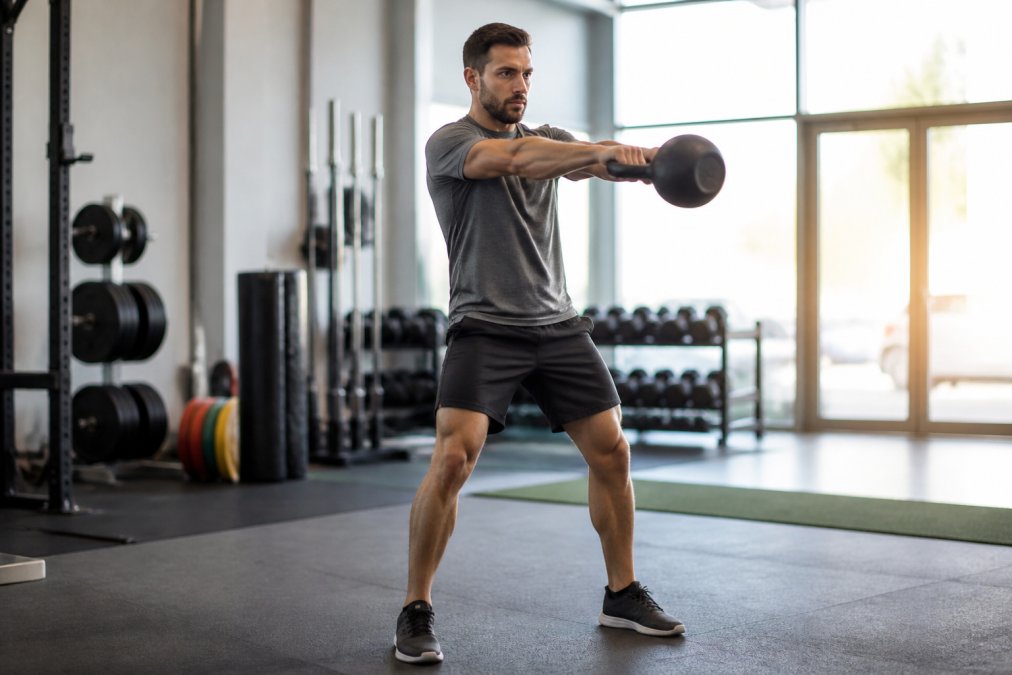
Matching Gear to Your Training Regimen
| Workout Type | What to Prioritize | Why It Matters |
|---|---|---|
| Weightlifting | Four-way stretch, gusseted crotch | Full range of motion on squats and deadlifts |
| HIIT / cross-training | Quick-dry fabric, flatlock seams | Handles sweat spikes without chafing |
| Running | Lightweight fabric, ventilation zones | Thermal regulation on longer efforts |
| Yoga / mobility | Seamless construction, athletic fit | Stays in place through deep positions |
For cold-weather training, a base layer under a mid-layer traps heat without bulk. Durable water repellent finishes help for outdoor sessions in wet conditions.
Cleveland Clinic overview of exercise and hydration
Best Athletic Fit Gym Clothes for Your Body Type
Generic size charts assume an average build that most men who train don't have. The best athletic fit gym clothes follow your natural proportions without squeezing or ballooning: tapered through the waist and chest while leaving room in the shoulders, lats, and thighs. That's why athletic fit outperforms both slim and relaxed cuts for most training.
Fit and Comfort Essentials
Body type changes the recommendation, and so does the specific garment spec. Use this as a starting point, then verify against the brand's own measurement chart:
- Broad shoulders, narrow waist: athletic fit or tapered cuts. Look for a chest-to-waist drop of roughly 4-6 inches on shirts, and avoid boxy cuts that hang off the shoulders and bunch under the arms during overhead presses.
- Larger thighs and glutes: prioritize gusseted crotch construction, four-way stretch, and a stretch waistband with an internal drawstring. A gusset adds a diamond or triangle of fabric at the crotch so the seam doesn't pull tight on squats.
- Taller frames (roughly 6'2" and up): check torso length on tanks and tees and inseam on shorts. A longer torso length prevents ride-up mid-lift, and a 7-inch or 9-inch short inseam usually lands above the knee instead of mid-thigh.
- Shorter frames: cropped joggers and 5-inch to 7-inch training shorts avoid bunching at the ankle and knee. A shorter inseam also keeps fabric out of the way on deadlifts.
- Slim builds: slim or athletic fit with a bit of stretch reads intentional rather than oversized. Avoid relaxed cuts that swallow the frame and hide the work you've put in.
- Muscular builds with a thick neck and traps: crew necks with a slightly wider collar opening sit better than tight crew necks that pull. Look for raglan sleeves, which move with the shoulder instead of binding at the seam.
How to Test Fit Before You Commit
The difference between a piece you wear weekly and one that sits in the drawer comes down to fit and comfort. Run this sequence in the fitting room or right after a delivery arrives:
- Overhead reach: raise both arms straight up. If the hem lifts above your waistband by more than a couple of inches, the torso length is short for you.
- Deep bodyweight squat: watch for the waistband rolling down and the crotch seam pulling. A gusset and stretch waistband should let you hit depth without adjustment.
- Lunge and hip hinge: check that shorts don't ride up the thigh and that the fabric doesn't restrict the hip crease.
- Shoulder rotation: roll your shoulders forward and back. Raglan or stretch shoulder panels should move without the collar choking.
- Static hold: stand still for 30 seconds. If a seam or waistband is already digging in, it will be worse 40 minutes into a session.
Men's Athleisure Trends 2026: Gym-to-Street Style
Men's athleisure trends in 2026 lean toward minimal, versatile pieces that work from a training session straight into a business-casual setting. The gym-to-street look wins because it removes the need for two separate wardrobes.
- Neutral tones that pair with office wear
- Minimal logos and clean lines
- Joggers styled as everyday pants, not just gym wear
- Fabric that looks structured but moves like performance gear
How to Test Gym Apparel for Longevity and Durability
Most reviews stop at first impressions: how a piece feels on day one. The real test is what it looks and performs like after 50+ washes, because that's when cheap construction shows its hand. Durability separates premium gear from fast fashion, and you can screen for it before you spend money.
The Failure Points That Matter
Gym apparel rarely fails all at once. It fails at predictable stress points:
- Crotch and seat seams: the highest-stress area on shorts and joggers. Flatlock or reinforced stitching resists fraying; a single overlock stitch is the first thing to go.
- Waistband elastic: cheap elastic loses recovery and starts rolling after repeated hot washes. Look for a wide, stitched-down waistband with an internal drawstring.
- Underarm and side seams: friction from arm swing and sweat breaks down thread over time. Reinforced bar tacks at stress points are a good sign.
- Fabric pilling: friction against itself and against equipment causes small fiber balls, usually on the inner thigh and lower back. A tight, high-twist knit resists pilling better than a loose, low-twist one.
- Anti-odor finish: silver-based and similar treatments fade with fabric softener and hot water. If odor resistance is the reason you're buying, treat the garment accordingly.
A 50-Wash Durability Protocol
You don't need a lab to test this. Run any new piece through a structured protocol and track the results:
- Baseline: photograph the seams, waistband, and fabric surface before the first wash.
- Wash cycle 1: cold water, mild detergent, no fabric softener, tumble dry low or hang dry. Note any immediate shrinkage.
- Wash cycles 5-10: check for fading, loose threads, and whether the fabric still snaps back when stretched.
- Wash cycles 25-30: inspect the crotch seam, waistband elastic, and underarm seams. This is where most failures begin.
- Wash cycles 50+: compare against your baseline photos. Look for pilling, thinning fabric, stretched-out cuffs, and a waistband that no longer holds.
- Performance check: after each milestone, wear the piece through one hard session and note chafing, odor, and whether it still moves with you.
What Good Looks Like After 50 Washes
A durable piece keeps its shape, its color, and its stretch recovery. Practically, that means:
- The fabric snaps back when you stretch it and release, no permanent bagging at the knees or elbows.
- The waistband still sits flat and holds without rolling.
- Seams are intact with no fraying or popped stitches at stress points.
- Color has faded minimally, if at all, and the surface shows little to no pilling.
- The anti-odor performance is still noticeable, not just a memory of how it smelled new.
Climate-Specific Gym Apparel Recommendations
Climate changes what you should wear more than most buyers expect. Hot, humid conditions call for lighter fabric weight and maximum breathability, while cold climates reward layering with base, mid, and outer layers.
CDC guidance on physical activity and heat safety
Frequently Asked Questions
What are men wearing to the gym in 2026?
In 2026, men are gravitating toward versatile pieces that transition from gym to street. Expect to see moisture-wicking shirts with seamless construction, athletic fit joggers with gusseted crotches, and compression gear designed for recovery. Fabrics focus on breathability, anti-odor properties, and four-way stretch. Many guys are opting for minimalist designs that work for both high-intensity interval training and casual wear, reflecting the ongoing athleisure trend.
What features should I look for in high-performance gym wear?
Prioritize moisture-wicking fabrics that pull sweat away from your skin, like synthetic blends with quick-dry properties. Look for flatlock seams to prevent chafing, gusseted crotches for range of motion, and ventilation zones in high-sweat areas. Anti-odor treatments help with freshness, while four-way stretch supports dynamic movements. Also check for durability features like pilling resistance and reinforced stitching, especially if you train often.
Are premium gym clothes worth the investment for 2026?
Premium gym apparel often uses higher-quality materials and construction that can outlast cheaper alternatives. Look for details like seamless construction, durable water repellent finishes, and ergonomic designs that enhance comfort. While the upfront cost is higher, the longevity and performance benefits can justify the price, especially if you wear your gear frequently for both training and casual settings. Always check return policies and customer reviews for proof of durability.
How do I choose the right gym apparel for my workout style?
Match your apparel to your training regimen. For weightlifting, prioritize compression gear and shorts with a gusseted crotch for mobility. For high-intensity interval training, choose lightweight, moisture-wicking tops and training shorts with ventilation zones. For cross-training, versatile pieces with four-way stretch work best. Consider climate too: in hot weather, go for breathability and quick-dry fabrics; in cold, layer with a base layer and mid-layer.
Choosing gym apparel that actually earns its place in your rotation comes down to fabric, fit, and durability, not logos. EVENLIFT builds premium fitness wear and athleisure essentials designed for exactly that balance, with carefully screened construction, unisex options, and pieces made to move from training to leading without a change. Get started with EVENLIFT and build a wardrobe that supports your standards in and out of the gym.