

Last Updated: November 12, 2026
Quick Summary
The best premium gym hoodies for outdoor training are the EVENLIFT lineup: the 8.5 oz./yd² Zip Up Premium Fleece Hoodie at $72.95 for cold-morning warm-ups, and the 10.3 oz./yd² Organic Premium Hoodies at $67.95 for lifting and layering. Match fabric weight to temperature and wind, and use a hoodie as a mid-layer below 40°F.
- The Zip Up Premium Fleece Hoodie weighs 8.5 oz./yd² and costs $72.95.
- The Organic Premium Hoodie is 10.3 oz./yd² and priced at $67.95.
- Above 50°F, wear the zip-up open or skip the hoodie entirely.
- Below 40°F, pair the 10.3 oz. pullovers with a wind shell or vest.
- Choose a regular fit for loaded lifts and a relaxed fit for mobility work.
Table of Contents
- Why Premium Gym Hoodies Matter for Outdoor Training
- Comparison Table: Premium Gym Hoodies at a Glance
- Zip Up Premium Fleece Hoodie: Best Workout Hoodie Zip Up for Cold Mornings
- Organic Premium Hoodie: The Best Workout Hoodies for Men Who Lift
- Oversized Organic Premium Hoodie: Lightweight Gym Hoodies for Mobility
- Durable Gym Hoodies: Construction, Wash Life, and Value
- Weather, Fit, and Safety: Matching a Hoodie to Your Training
- Build Your Outdoor Training Layer With EVENLIFT
- Frequently Asked Questions
Why Premium Gym Hoodies Matter for Outdoor Training
A hoodie is the most versatile piece of training apparel you own, and the wrong one ruins a cold session fast. The best premium gym hoodies for outdoor training are built to handle sweat, wind, and repeated washing.
Premium gym hoodies are hooded sweatshirts made from higher-grade fabrics, denser knits, and reinforced construction, priced for durability rather than fast fashion.
Outdoor training adds demands a gym floor never does. Wind strips heat from damp fabric, and temperature swings between a warm-up and a working set can leave you overheated or shivering. The right layer solves this.
Most guides rank hoodies on style and ignore fabric weight, which determines warmth, breathability, and layering. Get that right and everything else follows.
Below, we break down four EVENLIFT hoodies by training use case, then cover construction, weather matching, and fit.
Comparison Table: Premium Gym Hoodies at a Glance
| Hoodie | Fabric Weight | Fit | Price | Best For |
|---|---|---|---|---|
| Zip Up Premium Fleece Hoodie | 8.5 oz./yd² | Regular | $72.95 | Cold-morning warm-ups, easy on/off |
| Organic Premium Hoodie (Embroidered) | 10.3 oz./yd² | Regular | $67.95 | Lifting, heavyweight warmth |
| Organic Premium Hoodie | 10.3 oz./yd² | Regular | $67.95 | Everyday training, layering |
| Oversized Organic Premium Hoodie | 10.3 oz./yd² | Relaxed | $71.95 | Mobility work, mobility-focused sessions |
Fabric Weight
The core trade-off: the zip-up runs lighter and gives you venting control, while the pullovers run heavier for warmth and structure.
Zip Up Premium Fleece Hoodie: Best Workout Hoodie Zip Up for Cold Mornings
If your outdoor session starts before the sun warms the pavement, a zip-up is the smarter tool. The Zip Up Premium Fleece Hoodie uses an 8.5 oz./yd² cotton-polyester fleece blend with a jersey-lined hood and a metal kissing zipper. That zipper is the point: you can vent heat mid-set without stripping the layer off entirely.
The 80% cotton, 20% polyester blend gives it a soft face. The jersey-lined hood is part of the design, and the piece has metal eyelets.
The lighter 8.5 oz. weight can be worn with a shell layer, and its zipper lets you open and close it during a session.
Best for: cold-morning runs, warm-ups, and anyone who runs hot mid-session. Skip if: you want maximum warmth standing still in freezing conditions.
Link: shop the zip-up fleece hoodie
Organic Premium Hoodie: The Best Workout Hoodies for Men Who Lift
Lifters need a hoodie that survives chalk, friction, and repeated barbell contact. The Organic Premium Hoodie uses a 10.3 oz./yd² fabric, one of the heavier weights in this lineup.
The build is 80% organic cotton and 20% recycled polyester, certified under GOTS, OCS, and GRS standards. A kangaroo pocket keeps hands warm between sets, and metal-tipped round drawcords finish the hood cleanly. The regular fit leaves room through the chest and shoulders without draping like a tent.
Best for: barbell and dumbbell training in cool weather. Skip if: you train in heat and want the lightest possible layer.
Link: view the embroidered organic hoodie
Oversized Organic Premium Hoodie: Lightweight Gym Hoodies for Mobility
Mobility work and bodyweight training punish tight clothing. The Oversized Organic Premium Hoodie runs a relaxed fit with a soft, light-suede finish and durable 2x2 ribbed cuffs and hem, giving shoulders and hips room through full range without the fabric pulling across your back.
Made from the same 10.3 oz./yd² organic cotton and recycled polyester blend as the regular version, certified to GOTS, OCS, and GRS. It has a relaxed fit and durable 2 × 2 ribbed cuffs and hem.
Best for: mobility sessions, yoga-style warm-ups, and lifters who want room through the arms. Skip if: you prefer a close, athletic cut.
Link: see the oversized organic hoodie
Durable Gym Hoodies: Construction, Wash Life, and Value
Durability is where premium hoodies earn their price. This section looks at the construction details that tend to predict lifespan, and how to compare cost per wear.
The three construction details that predict lifespan
- Fabric weight: the 10.3 oz./yd² organic cotton and recycled polyester knit used in the pullovers is heavier than the 8.5 oz./yd² fleece zip-up. Heavier is not automatically better, so match the weight to the work.
- 2x2 ribbed cuffs and hem: the Oversized Organic Premium Hoodie features durable 2 × 2 ribbed cuffs and hem.
- Metal hardware: several hoodies in this lineup use metal eyelets, and the Organic Premium Hoodie has metal-tipped round drawcords.
Wash life: what actually shortens it
Care practices affect how long a hoodie lasts. Washing in cold water and air-drying generally helps cotton garments keep their shape, while high heat can shrink cotton and wear down elastic ribbing.
Premium value: cost per wear, not sticker price
Premium pricing and premium quality are not the same thing. The way to tell them apart is cost per wear, expected lifespan, and what the brand stands behind.
-
Cost per wear: divide the purchase price by the number of times you expect to wear the hoodie. A $67.95 hoodie worn about 312 times over two years works out to roughly $0.22 per wear, but the figure depends on how long the garment lasts in your use.
-
Repairability and warranty: check the brand's repair and warranty terms before you buy.
-
Certifications as a durability proxy: GOTS, OCS, and GRS certification do not guarantee abrasion resistance, but they do indicate the fabric supply chain is documented and the cotton and recycled polyester meet defined content standards. For readers weighing fabric standards, the Global Organic Textile Standard explains what GOTS certification actually requires.
The trade-off: the 8.5 oz. zip-up is lighter and has a zipper for venting, while the 10.3 oz. pullovers are heavier. Match the weight to the work.
Weather, Fit, and Safety: Matching a Hoodie to Your Training
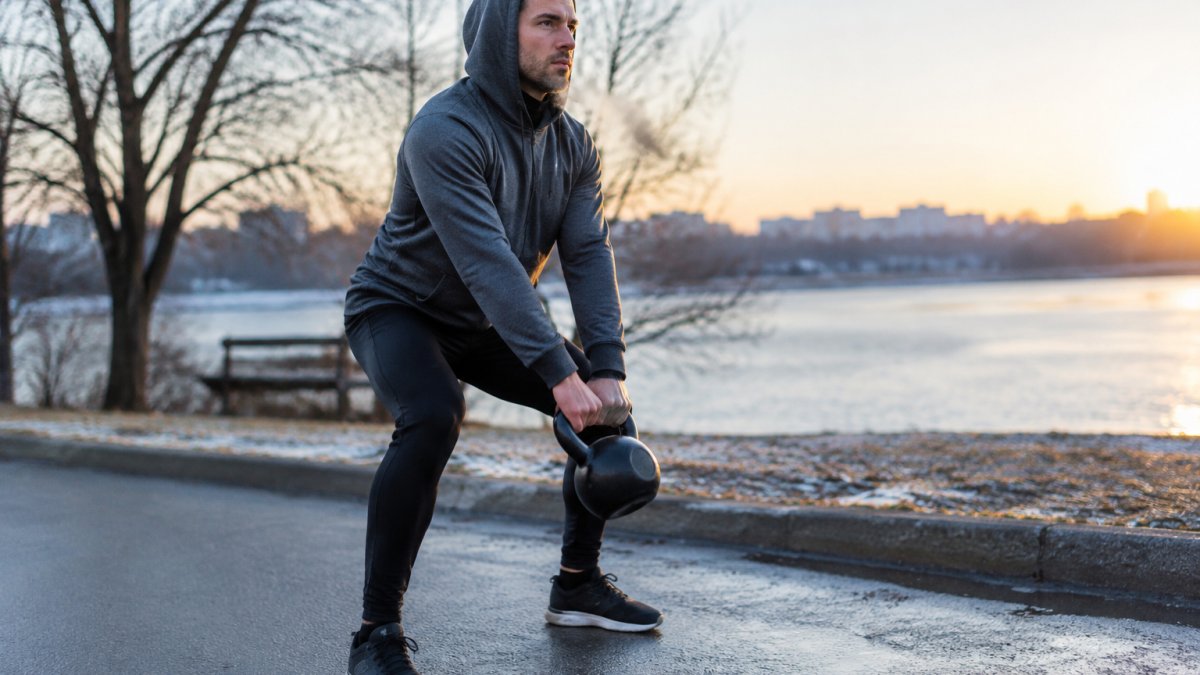
Most guides tell you to dress for the weather. That is not useful enough. The real question is which hoodie behaves best at a given temperature and wind speed, and when a hoodie is the wrong layer entirely. This section compares warmth, wind resistance, and breathability across conditions, then covers fit and mobility for the movements you actually do outdoors.
Weather-specific performance: warmth, wind, and breathability
A hoodie is a mid-layer, not a jacket. Its job is to trap warmth while letting sweat vapor escape. The two variables that change the recommendation are temperature and wind.
- Above 50°F: a hoodie is optional. If you run cold, the lighter 8.5 oz. zip-up can be worn open.
- 40-50°F: the 8.5 oz. zip-up is a lighter option, and its metal kissing zipper lets you adjust ventilation without removing the layer.
- Below 40°F: the 10.3 oz. pullovers are heavier and warmer. Pair them with a wind shell or vest in windy conditions.
- Below freezing with wind: a hoodie alone is the wrong layer. Use the 10.3 oz. pullover as a mid-layer under an insulated or windproof outer layer, and cover exposed skin. The American College of Sports Medicine publishes guidance on cold-weather exercise that is worth a read before training outdoors in winter.
When a hoodie is the wrong layer
A hoodie is generally a mid-layer for cool conditions. It is less suitable for:
- Heavy steady-state cardio in humid conditions above 50°F, where it traps heat and sweat with no venting benefit.
- Rain or wet snow, where cotton and fleece absorb water and lose insulation. A water-resistant shell belongs over the hoodie, not instead of it.
- High-wind exposure below freezing, where a windproof outer layer is required regardless of hoodie weight.
Fit and mobility: hood stability, sleeves, hem, and range of motion
Fit affects safety and performance more than most people realize. Assess four things before you train in a hoodie:
- Hood stability: a jersey-lined hood sits flatter and stays put better than an unlined hood, which bunches at the neck during overhead work. If the hood flops forward during a bent-over row, it will block your vision mid-set.
- Sleeve movement: sleeves should clear the wrist when you press overhead and not slide over your hands during push-up variations. The 2x2 ribbed cuffs on the oversized hoodie keep sleeves in place; a stretched cuff will not.
- Hem ride-up: a loose hem that rides over your face during a burpee is a hazard, and a hem that rides up during overhead work exposes your lower back to cold air. The regular fit holds position better for loaded lifts; the relaxed oversized fit is fine for mobility work but risky for heavy barbell work.
- Range of motion: the oversized cut gives shoulders and hips room through full range without pulling across the back, which suits dynamic warm-ups, stretching, and calisthenics. For loaded lifts, the regular fit already accounts for shoulder movement, do not size up, because the extra fabric lets the hem ride up during overhead work.
A simple decision sequence
- Check temperature and wind before you leave.
- Above 50°F: zip-up, worn open, or no hoodie.
- 40-50°F: 8.5 oz. zip-up, vented during work.
- Below 40°F: 10.3 oz. pullover under a wind shell.
- Below freezing with wind: hoodie as mid-layer only, with a windproof outer layer.
- Match the cut to the movement: regular fit for loaded lifts, relaxed fit for mobility and bodyweight work.
Build Your Outdoor Training Layer With EVENLIFT
Picking the right hoodie is one decision. Building a training setup that supports consistent outdoor work is a bigger one.
EVENLIFT designs and fulfills home gyms, assessing your goals, space, and budget. We also offer online coaching and in-home training, with two levels of six-month transformation programs built around fitness, nutrition, sleep, and stress management.
If you want to start with apparel, browse the full range and build your outdoor training layer piece by piece.
The hardest part of outdoor training is not the workout. It is building a system that survives a busy week, cold mornings, and the hundred small excuses that derail a plan. That is what we help you solve, with home gym design, turnkey equipment fulfillment, and coaching that ties training, recovery, and nutrition into one program.
Frequently Asked Questions
What is the best workout hoodie to wear at the gym?
Match the hoodie to the session. For indoor lifting, a midweight pullover in the 10.3 oz./yd.² range, like the Organic Premium Hoodie, keeps joints warm without overheating. For cold outdoor work, a zip-up in the 8.5 oz./yd.² range lets you vent heat mid-set. Look for a jersey-lined hood, metal zipper, and ribbed cuffs that hold shape after washing.
Are lightweight gym hoodies good for outdoor workouts?
Yes, when layered correctly. A lighter hoodie in the 8.5 oz./yd.² range is a lighter-weight option for active sessions. Wear it as a mid layer over a base tee in temperatures around 40-50°F, and add a wind shell on top when gusts pick up. Heavier 10.3 oz./yd.² hoodies suit rest periods and warm-ups better than hard intervals.
Should you wear a hoodie while exercising outdoors?
A hoodie works well for warm-ups, lifting, and steady effort in cool weather. During hard intervals, unzip or remove it so sweat can evaporate; trapped moisture chills you fast once you stop. Choose a zip-up so you can regulate heat without breaking stride, and keep the hood down unless wind or rain makes it necessary.
What features should I look for in premium gym hoodies?
Prioritize fabric weight, fit, and hardware. A 10.3 oz./yd.² organic cotton blend is heavier; an 8.5 oz./yd.² fleece is lighter for active sessions. Check for a jersey-lined hood, metal eyelets and zipper, ribbed cuffs and hem, and the fit described on each product listing. Certifications like GOTS and GRS signal verified material sourcing.
How do I keep durable gym hoodies from shrinking or pilling?
Wash cold and tumble dry low. High heat is the main cause of shrinkage in cotton-blend fleece, and friction from overdrying breaks surface fibers into pills. Turn the hoodie inside out, skip fabric softener, and zip the zipper before washing to protect the teeth.
