

Table of Contents
- Why Durable Gear Beats Fast Fashion Activewear
- What to Look for in Durable Workout Clothes
- Gymshark Alternatives for Men: Training Gear That Holds Up
- Gymshark Alternatives for Women: Leggings and Bras Built to Last
- Durability by Garment Type and Activity
- How to Make Activewear Last Longer
- Cost Per Wear: The Real Value of Durable Gear
- Frequently Asked Questions
Last Updated: October 12, 2026
Why Durable Gear Beats Fast Fashion Activewear
A Gymshark alternative for durable gear starts with one question: how many washes will this survive?
At EVENLIFT, we built our line around the opposite premise: gear should hold its shape, color, and structure through years of training. That means heavier fabrics, reinforced construction, and fibers chosen for recovery rather than cost.
The real cost of cheap gym apparel is the replacement cycle. When leggings pill after six washes or a t-shirt fades after a month, you buy again. Durable gear breaks that loop.
What to Look for in Durable Workout Clothes
Durable workout clothes share three traits: heavier fabric, a fiber blend built for recovery, and reinforced seams. Miss one and the garment fails early, usually at the seam or waistband.
Most shoppers judge activewear by feel in the fitting room. That is the wrong test: a soft, lightweight fabric can feel great on day one and lose its shape by week four.
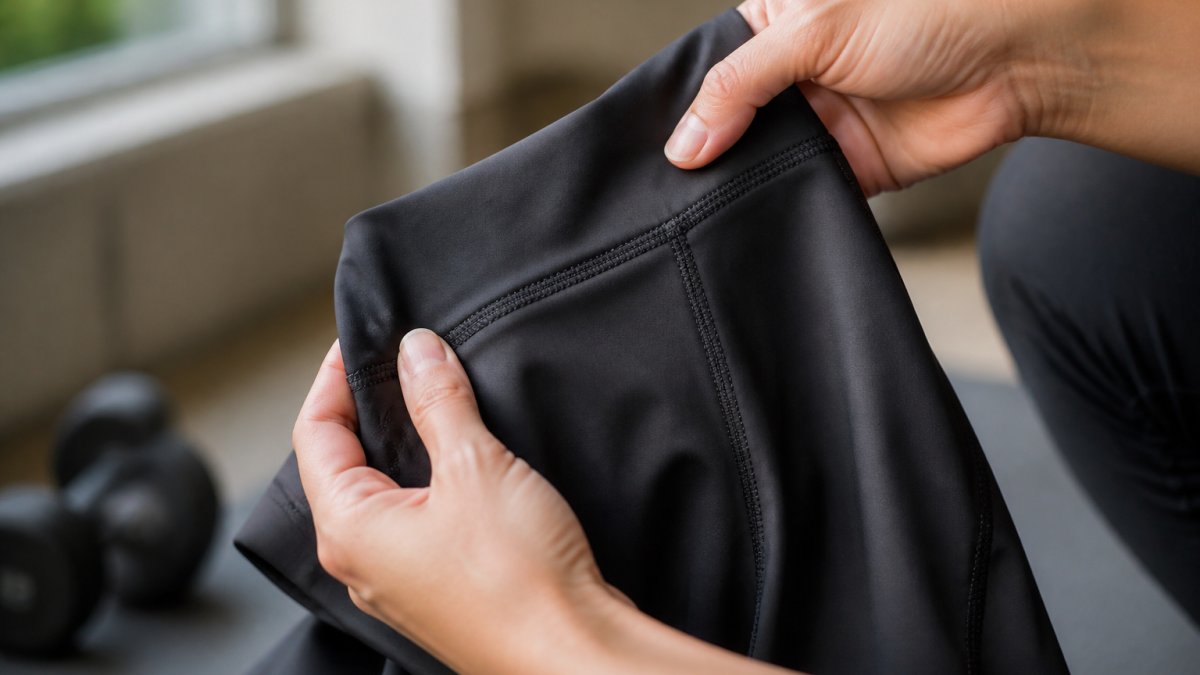
Fabric Weight and Fiber Blend
Fabric weight, measured in ounces per square yard, tells you how much material you are getting. Lightweight knits under 4 oz/yd² wear thin fast, while midweight fabrics in the 5-7 oz/yd² range hold structure and resist the see-through problem that plagues cheap leggings.
Fiber blend matters just as much. Nylon and elastane, like the 70% recycled nylon and 30% elastane in our Women's Luxe Leggings, gives stretch with recovery. Polyester holds color and resists pilling; cotton blends add softness but need a synthetic partner to keep their shape.

A few mechanisms are worth knowing by name:
- Denier describes yarn thickness. Higher-denier nylon resists abrasion better than fine, soft yarns, which is why heavy-duty leggings feel denser than fashion knits.
- Elastane percentage drives recovery. Higher elastane costs more to produce but snaps back after stretching; lower-elastane fabrics sag by month three.
- Interlock and double-knit constructions use two interlocked layers that resist runs and picks better than a single jersey knit.
- Pilling happens when short fibers work loose and tangle. Longer-staple fibers and tighter twist reduce it, which is why cheap cotton-poly blends pill first at the inner thigh and underarm.
Seam Strength and Stitching
Seams fail before fabric does. Flatlock and reinforced stitching distribute tension instead of concentrating it, and side-seamed construction, like our Embroidered Premium Fleece Jogger, keeps the garment from twisting after repeated washes.
Stitch density is the detail almost no brand discloses. A denser stitch line spreads load across more thread and resists the popped seam at the shoulder or crotch gusset.
The American Society for Testing and Materials textile standards define the test methods brands use to measure seam strength, abrasion resistance, and pilling.
Stretch Recovery and Abrasion Resistance
Two tests separate durable gear from fast fashion: stretch recovery and abrasion cycles survived before thinning.
Stretch recovery keeps leggings opaque and waistbands snug. Home check: stretch fabric over your knee, hold ten seconds, release, and see whether it snaps back flat or stays baggy. Baggy means the elastic memory is gone.
Abrasion resistance keeps thighs from wearing through and colors from fading at friction points. Look for fabric descriptions that mention abrasion testing or a Martindale cycle count.
Gymshark Alternatives for Men: Training Gear That Holds Up
Men's training gear from a Gymshark alternative should survive heavy lifting, not just light cardio. Failure points are predictable: stretched collars, blown-out shoulder seams, and shorts that lose waistband elasticity within months.
Our Performance Moisture-wicking T-shirt (Unisex) is built with 100% premium polyester at 4 oz/yd². It resists fading and snagging, wicks moisture, and carries UPF44+ protection, keeping color and structure through repeated wash cycles.

For lower body, our Performance Moisture-wicking Mesh Shorts (Unisex) use 100% recycled polyester with two-way stretch and an elastic waistband. The fabric is OEKO-TEX 100 standard certified.

| Garment | Fabric | Weight | Key Durability Feature |
|---|---|---|---|
| Performance T-shirt | 100% polyester | 4 oz/yd² | Fade and snag resistant |
| Mesh Shorts | 100% recycled polyester | 4.42 oz/yd² (US) | Two-way stretch, OEKO-TEX certified |
| Fleece Jogger | 65% cotton / 35% polyester | 8.3 oz/yd² | Side-seamed construction |
Gymshark Alternatives for Women: Leggings and Bras Built to Last
Women's activewear lives or dies on two pieces: leggings and sports bras. Both sit under constant tension and show wear faster than anything else in the closet.
Our Women's Luxe Leggings use a 70% recycled nylon and 30% elastane blend at 6 oz/yd², weight that keeps them opaque through squats and lunges.
The Women's Luxe Sports Bra uses the same fiber blend for a second-skin fit with medium support.
Performance Moisture-wicking T-shirt (Unisex) →
What most guides miss: elastane percentage drives longevity. Higher elastane costs more to produce but recovers its shape after stretching; lower-elastane fabrics sag by month three.
Durability by Garment Type and Activity
Durability is not one number. It depends on the activity and which garment takes the load, a t-shirt that survives a year of lifting may fail in a month of trail running.
Here is how to match garment to activity, based on the construction that matters for each.
| Activity | Stress Point | What to Prioritize |
|---|---|---|
| Weightlifting | Shoulders, waistband | Seam strength, stretch recovery |
| Running | Fabric friction, moisture | Abrasion resistance, moisture-wicking |
| High-intensity workouts | Full range of motion | Two-way or four-way stretch |
| Yoga and mobility | Knee and hip stretch | Fabric weight, opacity |
| Gym-to-street wear | Wash frequency, color | Color retention, pilling resistance |
For lifting, prioritize seam construction and waistband recovery; for running, moisture-wicking and abrasion resistance; for gym-to-street, color retention and pilling resistance, since those get washed more often.
How to Make Activewear Last Longer
Making activewear last longer comes down to four free habits, cold washing, air drying, fewer washes, and rotating your pieces, that together can double a garment's usable life.
- Wash cold, always. Heat degrades elastane and shrinks cotton blends.
- Skip the dryer. Air drying preserves shape and prevents pilling.
- Wash less often. Spot clean when you can. Gym gear tolerates a second wear more than you think.
- Turn garments inside out. This protects the outer surface from friction against other clothes.
- Use mesh laundry bags. They stop zippers and hooks from snagging fabric.
- Rotate your pieces. Wearing the same three items every week wears them out faster than spreading the load.
A common mistake is treating activewear like everyday cotton. Gym apparel is engineered fabric, and it responds to care. The International Organization for Standardization's textile care guidance underpins the care symbols on every garment label, and following them is the single easiest way to extend lifespan.
Cost Per Wear: The Real Value of Durable Gear
Cost per wear is the price of a garment divided by the number of times you actually wear it. It is the only pricing metric that matters for activewear, and it almost always favors durable gear.
Run the math: a budget legging that lasts 30 wears costs more per wear than a premium legging that lasts 300.
Here is the framework, so you can run it on any pair of leggings you are considering:
- Estimate realistic wears. Count how often you would actually wear the piece per week, then multiply by the months you expect it to survive. Be honest, most people overestimate.
- Divide price by estimated wears. That is your cost per wear. A $30 legging worn twice a week for three months is roughly $1.15 per wear. A $90 legging worn twice a week for two years is roughly $0.86 per wear.
- Add the replacement multiplier. If the cheap option fails at month three, you buy it again, and again, so the true cost is the price times the number of replacements across the same two-year window.
- Subtract resale or hand-me-down value. Durable gear that still holds shape and color can be resold, gifted, or passed on. Fast fashion rarely can.
This is where fast fashion wins the transaction and loses the relationship. The low sticker price is real. The replacement cycle is hidden.
Warranty, Returns, and Repair: The Hidden Value Line
Cost per wear is only half the equation. The other half is what happens when a garment fails.
- Return windows. Most brands measure returns in days from delivery and exclude worn or washed items. Read the policy before you buy; a generous window beats a slightly lower price.
- Warranty coverage. Defect coverage for materials or workmanship differs from a satisfaction guarantee, and it protects you when a seam blows out at month two.
- Repair options. Some brands repair or replace failed seams and zippers, a sign of confidence in the build.
- Exclusions. Normal wear, improper washing, and fabric softener damage are commonly excluded, which is another reason the care guidance here matters.
When comparing a budget piece and a durable piece, put the return policy next to the price. A garment with a clear return path has a lower effective cost than a cheaper one with a 30-day window and no coverage.
The Replacement Cycle Is the Real Price
Shoppers commonly replace cheap activewear two to four times per year. Each replacement means a new checkout, a new shipping wait, and the same failures, pilling, fading, sagging waistbands, see-through fabric.
Durable gear breaks that loop, holds resale and gifting value, and keeps you out of the constant re-shopping cycle. That is the real argument for a Gymshark alternative built around construction rather than marketing.
Frequently Asked Questions
What should I look for in long-lasting gym clothes?
Focus on fabric weight, fiber blend, and seam construction. Heavier fabrics like 6 oz/yd² leggings resist pilling better than thin ones. Look for flatlock or reinforced stitching at stress points. Moisture-wicking polyester and nylon blends with elastane hold their shape longer than cotton-heavy fabrics. Check for details like ribbed cuffs, side-seamed construction, and tear-away tags, which signal a garment built for repeated wear and washing.
How can I make workout clothes last longer?
Wash in cold water on a gentle cycle and avoid fabric softener, which clogs moisture-wicking fibers. Turn garments inside out before washing to reduce abrasion. Air dry when possible; if you use a dryer, choose low heat. Rotate between several pieces so each gets rest between wears, which helps stretch recovery. For pieces like the Embroidered Premium Fleece Jogger, follow care instructions exactly: machine wash cold, tumble dry low.
Are Gymshark alternatives for women actually more durable?
Durability depends on construction, not brand name. Look for leggings with a high recycled nylon content and elastane for stretch recovery. For example, the Women's Luxe Leggings use 70% recycled nylon and 30% elastane at 6 oz/yd², a combination that resists pilling and holds its high-rise fit through repeated washes. Sports bras with a second-skin fit and removable pads, like the Women's Luxe Sports Bra, maintain support without stretching out.
Is it worth paying more for durable gear?
Yes, if you calculate cost per wear. A $68 pair of leggings worn twice a week for two years costs about $0.65 per wear. A $25 pair that pills after three months costs more per wear and needs replacing sooner. Durable gear also reduces the environmental impact of constant replacements. Look for pieces like the Performance Moisture-wicking T-shirt at $39.95, which resists fading and snagging, or the Embroidered Premium Fleece Jogger at $69.95 with side-seamed construction for lasting structure.
Which gym clothing brands are best for strength training?
For strength training, prioritize stretch recovery, abrasion resistance, and seam strength. Look for two-way stretch fabrics and reinforced stitching at high-stress areas like shoulders and knees. The Performance Moisture-wicking Mesh Shorts offer two-way stretch and an elastic waistband that holds up during squats and deadlifts. For tops, choose moisture-wicking fabrics that won't cling or restrict movement. Avoid cotton-heavy pieces that absorb sweat and lose shape.