

Table of Contents
- Choosing the Best Fabric for Sportswear
- High-Intensity Training Clothes: What to Look For
- Workout Clothes Fit Guide: Comfort and Range of Motion
- How to Wash Athletic Clothing to Preserve Performance
- Durability and Garment Construction in High Performance Athletic Apparel
- Athleisure Essentials: Style and Function Beyond the Gym
- Frequently Asked Questions
Last Updated: October 15, 2026
Choosing the Best Fabric for Sportswear
The best fabric for sportswear depends on how much you sweat, how long you train, and whether you need the garment to double as everyday wear. For most training, a synthetic blend outperforms cotton because it moves moisture away from skin instead of holding it.
Synthetic fibers such as polyester, nylon, and elastane are engineered for movement. They dry fast, stretch without losing shape, and resist the cling that makes cotton uncomfortable mid-session. Natural fibers like cotton feel soft against skin but absorb sweat and stay heavy, which is why they suit warm-up layers more than hard training.
Synthetic Fibers vs. Natural Fibers
Synthetic wins for anything that makes you sweat. Polyester pulls moisture to the surface where it evaporates, and elastane adds the stretch that lets a garment follow your range of motion.
Blends split the difference. That is the construction behind our Women's Luxe Leggings, built from 70% recycled nylon and 30% elastane for a fabric that stretches and returns to form.
Technical Fabric Performance, Explained in Measurable Terms
Most apparel copy leans on words like "breathable" and "moisture-wicking" without saying what they mean. Here is how to read them as comparable criteria instead of marketing claims:
- Moisture transfer: how quickly a fabric moves liquid sweat from the inner face to the outer face. A knit with a hydrophobic inner layer and a hydrophilic outer layer moves sweat in one direction; a single-layer knit spreads it in both, which is why some shirts feel damp on the skin even when the surface looks dry.
- Drying time: the practical measure is how long a garment takes to return to its dry weight after a heavy session. Thin, high-surface-area knits dry faster than dense, heavy ones. A common pattern is that a lightweight polyester tee air-dries in roughly the time it takes to shower and change, while a cotton tee can still be damp hours later.
- Breathability: air permeability, or how easily air passes through the fabric. Open knits and mesh panels vent heat; tightly woven or coated fabrics block wind and rain but trap heat. You cannot maximize both at once, so match the fabric to the conditions.
- Stretch recovery: how completely a fabric returns to its original dimensions after being stretched. Elastane content drives this, but so does knit structure. A fabric that recovers poorly develops baggy knees, stretched necklines, and a waistband that no longer holds.
A Sport-by-Sport Fabric Selection Matrix
Fabric needs change with the demands of each activity. Use this as a starting point, then adjust for your own sweat rate and climate:
| Activity | Priority fabric properties | Fabric weight | Fit priority |
|---|---|---|---|
| Running | High moisture transfer, fast drying, breathability | Light | Close but non-binding; minimal seams to reduce chafe |
| Strength training | Stretch recovery, abrasion resistance, odor control | Mid | Full range of motion at shoulders and hips |
| Cycling | Abrasion resistance, compression, moisture transfer | Mid to heavy | Snug, stays put in the saddle |
| Tennis and court sports | Stretch recovery, breathability, quick drying | Light to mid | Unrestricted rotation and lateral movement |
| Yoga and mobility | Four-way stretch, soft hand feel, recovery | Light to mid | Second-skin without restriction |
| Cold-weather training | Insulation, wind resistance, moisture transfer as a base layer | Mid to heavy | Room for a base layer underneath |
Fabric Properties That Matter Most
Four properties decide whether a garment performs or fails: moisture-wicking, breathability, stretch recovery, and durability. Wicking moves sweat off skin. Breathability lets heat escape. Stretch recovery keeps the fit consistent after repeated wear.
Look for fabric weight as a rough gauge of substance. The Textile Exchange materials guidance is a useful reference for understanding how fiber choice affects both performance and lifespan.
Material Trade-Offs and Garment Lifespan
No fiber wins on every measure, and the honest trade-offs are worth knowing before you buy:
- Recycled versus virgin synthetics: recycled polyester and nylon reduce demand for new petroleum-based fiber and keep plastic out of landfills, but they can vary more in quality and may shed microfibers during washing just like virgin synthetics. A microfiber-catching wash bag reduces what reaches waterways.
- Durability versus biodegradability: the same synthetic fibers that resist abrasion and hold shape for years also resist breaking down at end of life. That is a feature during use and a problem after it.
- Performance finishes versus natural feel: antimicrobial and stain-release finishes add function but fade with heat and softener, so the garment's best performance is often its first few months.
- Repair and end-of-life: reinforcing seams, replacing a zipper, or re-elasticizing a waistband can extend a garment's useful life well past the point most people replace it. When a piece is truly finished, textile recycling programs accept clean synthetic garments that curbside recycling will not.
Weighing these trade-offs is part of choosing well. A garment that lasts three years of regular training and gets repaired once costs less per session than one replaced every season, and it keeps fiber out of the waste stream longer.
High-Intensity Training Clothes: What to Look For
High-intensity training clothes need three things: moisture management, unrestricted range of motion, and construction that survives repeated stress.
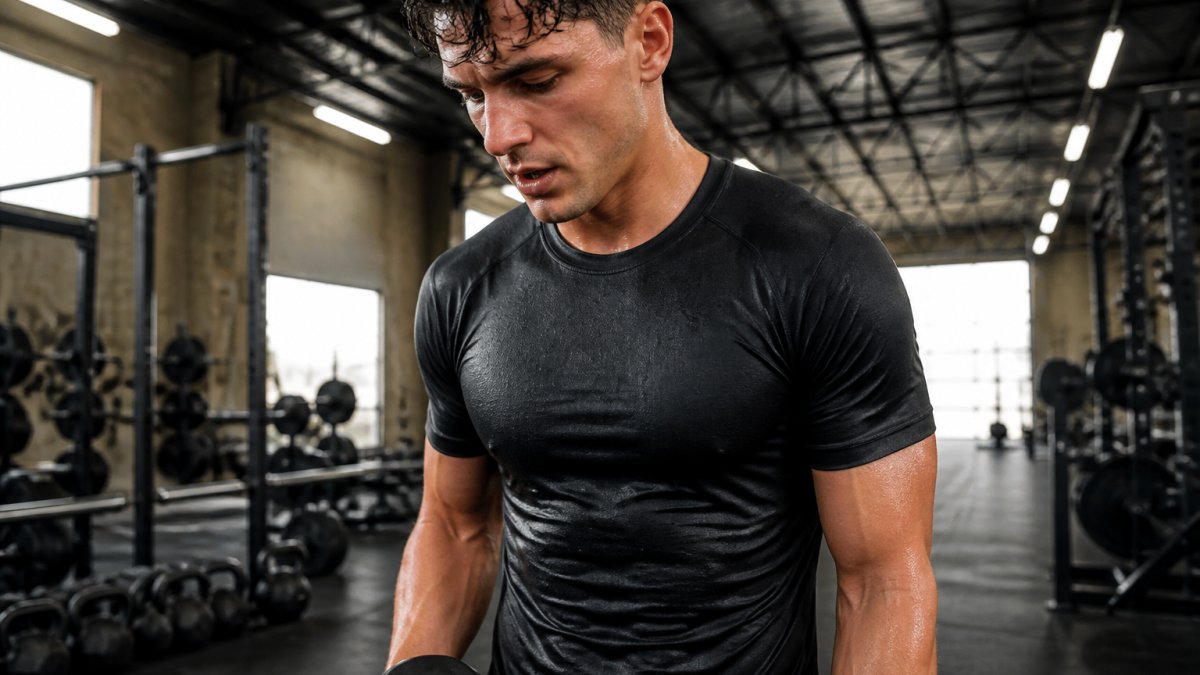
Start with the fabric. Our Performance Moisture-wicking T-shirt is built from 100% premium polyester at 4 oz/yd², with UPF44+ protection and a relaxed fit that does not bind across the chest or shoulders.

For lower-body training, shorts carry the load. Our Performance Moisture-wicking Mesh Shorts use 100% recycled polyester with two-way stretch, UPF50+ protection, and OEKO-TEX 100 certification.

Workout Clothes Fit Guide: Comfort and Range of Motion
Fit determines whether a garment helps or hinders your training. A shirt that bunches at the shoulders restricts overhead pressing. Leggings that slide down mid-squat force constant adjustment.
Measure at rest, then test in motion. Try an overhead reach, a deep squat, and a torso twist before deciding. If anything pulls, rides up, or bunches, size up or try a different cut.
Athletic Fit vs. Relaxed Fit
Athletic fit follows the body's line with enough room to move; relaxed fit adds space through the chest, waist, and thighs. Neither is better. The right choice depends on your body and your activity.
| Fit Type | Best For | Feel | Movement |
|---|---|---|---|
| Athletic fit | Lifting, running, yoga | Close to body | Follows contour |
| Relaxed fit | Cross-training, layering | Looser through torso | Extra room |
| Regular fit | Everyday training, athleisure | Straight cut | Balanced |
Our Women's Luxe Sports Bra uses a second-skin fit with removable pads and medium support, which suits gym workouts, yoga, and training. For anyone between sizes, the relaxed cut of our performance tee gives more margin.
Performance Moisture-wicking T-shirt (Unisex) →

How to Wash Athletic Clothing to Preserve Performance
Wash athletic clothing in cold water on a gentle cycle, skip fabric softener, and air-dry when you can. Heat and softener are the two biggest killers of performance fabric: heat breaks down elastane, and softener coats the fibers that do the wicking.
Follow these steps:
- Turn garments inside out to protect the outer surface
- Wash in cold water with a mild detergent
- Skip fabric softener and dryer sheets entirely
- Avoid washing with heavy items like towels or denim
- Air-dry, or use low heat if you must machine dry
- Wash immediately after heavy sweat sessions to prevent odor set-in
Most performance garments carry odor resistance and stain release built into the fabric. The FTC guidance on textile care labels explains what manufacturers must disclose about washing and what those symbols actually mean.
Durability and Garment Construction in High Performance Athletic Apparel
Durability comes down to fabric weight, stitch quality, and how the seams handle stress. Flatlock seams lie flat against skin and resist the chafing that standard seams cause during long sessions.
Check three things before you commit to a piece:
- Fabric weight: heavier knits resist snags and hold shape longer
- Seam type: flatlock or bonded seams reduce chafing and add strength
- Stress-point reinforcement: bar tacks and double stitching at high-tension areas
Fade and snag resistance matters more than most buyers realize. A garment that pills after ten washes looks worn long before it wears out.
This is where cost-per-wear beats sticker price. Our Unisex mesh shorts carry the same recycled polyester construction as the performance line, certified to the Global Recycled Standard and the Recycled Claim Standard.
Athleisure Essentials: Style and Function Beyond the Gym
Athleisure works when a garment performs in the gym and reads as intentional outside it.
Build around neutral colors and clean lines. The Cotton Incorporated lifestyle apparel research tracks how consumers increasingly buy one garment for multiple settings, which is exactly the shift athleisure answers.
Our Women's Luxe Leggings use a high-rise, full-length cut with an ultra-soft stretch fabric, designed to move from morning yoga to evening errands without a change. For a layered look, the mesh shorts work over leggings in cooler weather or on their own in summer.
Building a wardrobe that holds up through heavy training and still looks sharp outside the gym is harder than it sounds, and most activewear forces you to choose one or the other.
Frequently Asked Questions
What fabrics are best for athletic clothing?
The best fabric for sportswear depends on your activity. Moisture-wicking synthetics like polyester and nylon move sweat away from your skin and dry quickly, making them ideal for high-intensity training. Blends with elastane add stretch for freedom of movement. Natural fibers like cotton feel soft but hold moisture and dry slowly, so they work better for low-impact activities or casual wear. Look for performance fabrics with odor resistance and breathability for the gym.
How should workout clothes fit?
Workout clothes should allow full range of motion without being baggy enough to snag on equipment. A good fit guide: tops should allow you to raise your arms overhead without the hem riding up past your waist, and bottoms should stay in place during squats and lunges without needing constant adjustment. Athletic fit is closer to the body than relaxed fit, which reduces fabric bunching during movement. Always check the brand's size chart and customer reviews for fit accuracy.
How do you wash athletic clothing to make it last longer?
Wash athletic clothing in cold water on a gentle cycle to protect fabric fibers and prevent shrinkage. Turn garments inside out to reduce surface abrasion, and avoid fabric softeners, which coat moisture-wicking fibers and reduce their effectiveness. Use a mild detergent and skip the dryer when possible; hang or lay flat to dry. For high performance athletic apparel with odor resistance, wash promptly after use to prevent bacteria buildup that causes lingering smells.
What features should you look for in performance apparel?
Look for moisture-wicking fabric, breathability, quick-drying properties, and stretch for range of motion. UPF protection matters for outdoor training. Check garment construction: flatlock seams reduce chafing, and reinforced stitching at stress points extends lifespan. For high-intensity training clothes, prioritize odor resistance and durability. Brands like EVENLIFT offer unisex options with these features, such as the Performance Moisture-wicking T-shirt with UPF44+ protection and stain release.
How often should you replace workout clothes?
Replace workout clothes when you notice permanent odors that persist after washing, stretched-out elastic, pilling, or thinning fabric that no longer wicks moisture. With proper care, quality high performance athletic apparel can last one to three years of regular use. Rotating several pieces and washing them correctly extends lifespan significantly. Investing in durable construction upfront, like reinforced seams and premium fabrics, reduces how often you need to replace your gear.
What is the best apparel for high-intensity training?
The best apparel for high-intensity training combines moisture-wicking fabric, four-way stretch, and a fit that stays in place during explosive movements. Look for lightweight, breathable materials that dry quickly and resist odor. Mesh panels or perforated fabrics improve ventilation. For bottoms, two-way stretch shorts or leggings with a secure waistband work well. EVENLIFT's Performance Moisture-wicking Mesh Shorts, made from recycled polyester with UPF50+ protection, are designed for flexibility during intense sessions.