

Last Updated: November 14, 2026
Quick Summary
Choose a gym bag by first listing everything you carry, including worst-case loads, then matching capacity to your training frequency, usually 30-45 liters for moderate routines. Pick a style, a separate space for shoes or wet gear, and materials you can clean easily.
- Spend five minutes listing everything you carry, then group items by dry clothes, shoes, wet gear, and valuables.
- Count the worst-case version of your week, not the average, since swimming or a laptop can double volume.
- Moderate routines carrying about 20-28 liters of gear usually suit a 30-45 liter bag.
- Check a bag's interior dimensions against your bulkiest item, such as shoes, before buying.
- Empty the bag after each use and air-dry it fully, since trapped moisture causes most odor.
Table of Contents
- Start With an Inventory of What You Actually Carry
- Matching Bag Capacity to Your Routine and Training Frequency
- Choosing a Bag Style: Duffel, Backpack or Tote
- Compartment Layout: Shoes, Wet Gear and Dirty Clothes
- Materials, Water Protection and Easy Cleaning
- Fit, Straps and Carrying Comfort for Your Body
- Choosing a Gym Bag for Swimming, Work or Both
- Gym Bag Essentials Checklist and Next Step for Your Setup
- Frequently Asked Questions
Start With an Inventory of What You Actually Carry
Most people buy a gym bag based on how it looks, then discover it can't hold what they actually bring. The fix starts before you shop. Spend five minutes listing everything you carry to a typical session, and you'll know what size and layout your gym bag needs.
Lay everything out on a bench or the floor. Include clothes, shoes, a water bottle, towel, toiletries, and any accessories like a lifting belt, wraps, or a laptop if you commute with it. Then group items by how they should be stored: dry clothes, shoes, wet or sweaty gear, and valuables.
A common mistake is packing for the best-case day. People plan for a full session with a change of clothes, then forget that a swim, a second outfit, or a laptop can double the volume. Count the worst-case version of your week, not the average one.
Watch out: a bag that looks roomy in the store can feel cramped once shoes and a wet towel go inside. Check the bag's stated dimensions against your list before you commit.
Matching Bag Capacity to Your Routine and Training Frequency
Bag size should follow your routine, but "get a bigger bag" is not actionable. The useful move is to convert your inventory into measurable volume, then verify the bag's interior dimensions against your bulkiest items.
Start with rough volume estimates for common gear. These are approximate packed volumes, not exact product specs:
| Item | Approximate packed volume |
|---|---|
| T-shirt and shorts | 3-5 liters |
| Hoodie or sweatshirt | 5-8 liters |
| Lifting shoes or sneakers (pair) | 5-8 liters |
| Water bottle (32 oz) | about 1 liter |
| Towel (body size) | 3-5 liters |
| Toiletry kit | 1-2 liters |
| Lifting belt | 2-4 liters |
| Laptop (15-inch) with sleeve | 3-5 liters |
| Swimsuit and goggles | 1-2 liters |
Approximate packed volume
Add the items you actually carry. A typical moderate load, clothes, shoes, towel, bottle, toiletries, lands around 20-28 liters of gear.
Use your inventory to pick a tier, then verify it:
| Routine | What It Usually Carries | Approximate Gear Volume | Capacity Target |
|---|---|---|---|
| Light: 2-3 sessions a week, locker available | Clothes, water, small towel | 10-15 liters | 20-30 liters |
| Moderate: 4-5 sessions, no locker | Clothes, shoes, toiletries, towel | 20-28 liters | 30-45 liters |
| Heavy: daily training, or training plus swimming or work | Multiple outfits, shoes, wet gear, laptop | 30-40+ liters | 45 liters and up |
These ranges are guidance, not a rule. The point is to match the bag to how often you go and how much you bring each time.
To verify fit before buying, compare the bag's interior dimensions to your bulkiest item, not to the gear list as a whole.
A practical test: pack a duffel or backpack you already own with your full kit, then measure the packed bundle's length, width, and height and multiply them (in inches) and divide by 61 to get approximate liters. Compare that number to the bag you are considering.
Frequency matters as much as volume. If you train daily, you will pack and unpack constantly, so reach and access become more important than raw space. A bag with a side pocket for small items saves time every visit.
Choosing a Bag Style: Duffel, Backpack or Tote
Three styles dominate. Each suits a different carrying pattern.
Duffel bags open wide and lie flat, which makes packing and finding items fast. They work well for a single main compartment and carrying in one hand or over the shoulder. The downside is that they can be harder to carry for long distances without a padded shoulder strap.
Backpacks distribute weight across both shoulders and keep your hands free. They suit commuters, cyclists, and anyone walking a long way. Their openings are often narrower, so a deep bag can make small items hard to reach.
Totes are lighter and more open-topped, usually better for short trips and minimal gear. They rarely offer enough protection for wet items or shoes, so they're a poor choice for a full training kit.
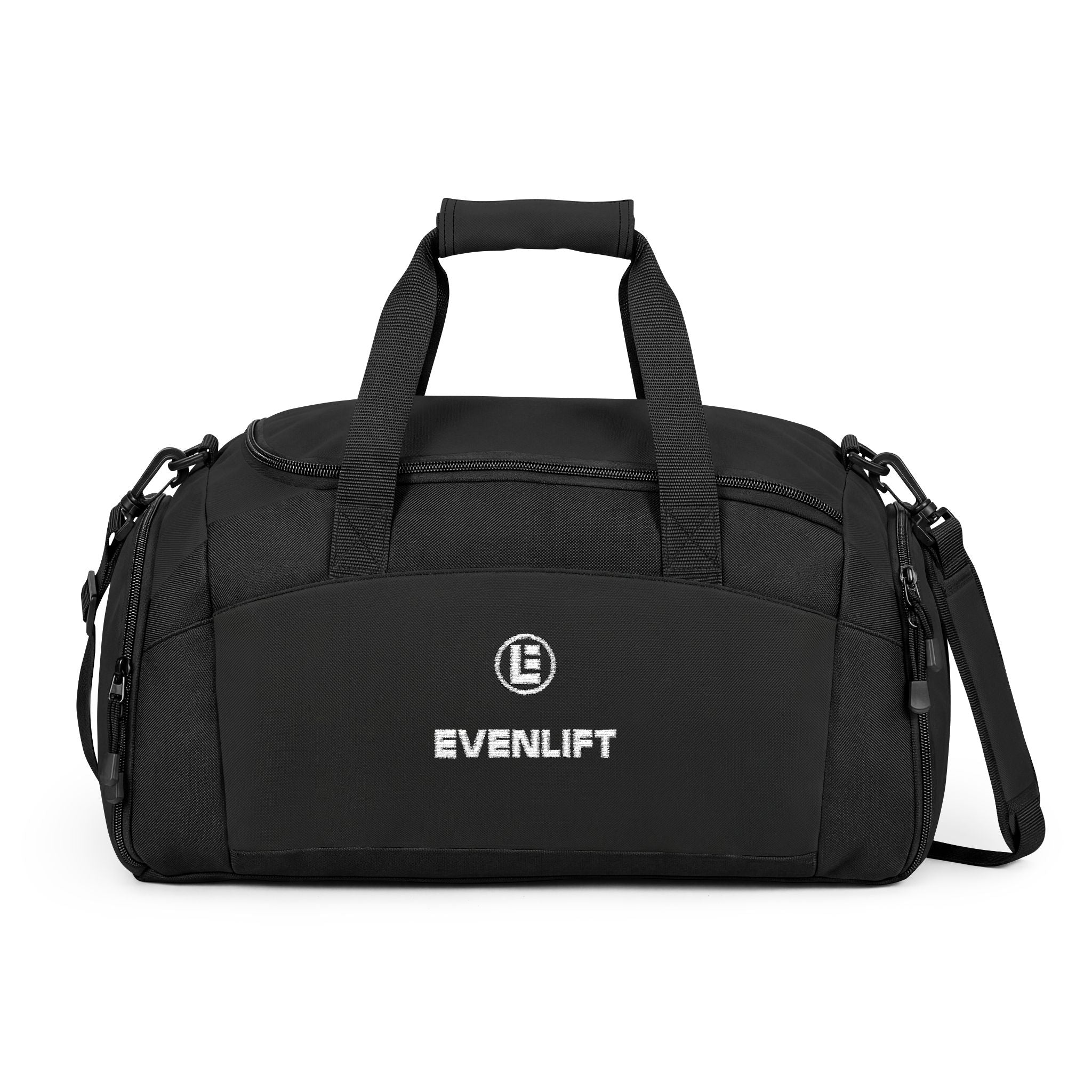
For most people carrying a complete kit, a duffel with a detachable shoulder strap or a backpack covers the widest range of needs. A clean, single-compartment option is the Gym Bag, Black Sports Duffle with Svenlipt Logo, Durable Workout & Travel Carryall ($75.95). It uses a 600D polyester body (half recycled fibers) with a zippered main compartment, a side zip pocket, and a detachable adjustable shoulder strap.
Compartment Layout: Shoes, Wet Gear and Dirty Clothes
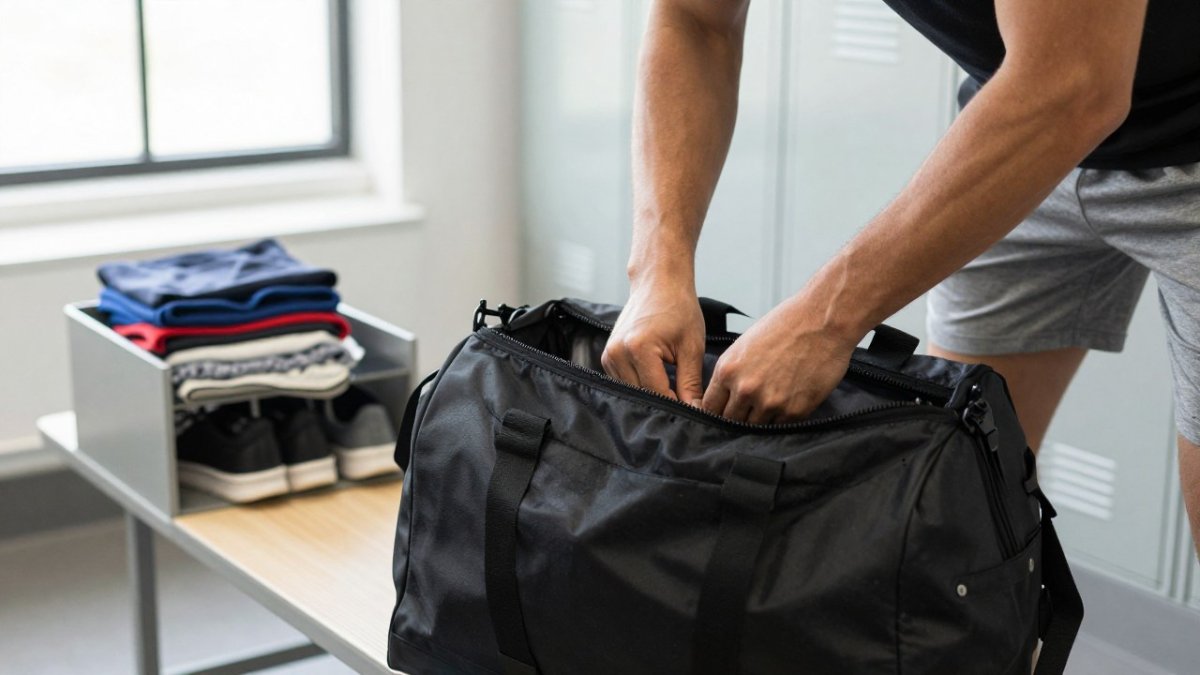
Layout determines whether a bag stays usable after a few weeks. The most common complaint is mixing clean clothes with sweaty ones, which spreads odor and dampens everything.
Look for these features:
- A separate shoe compartment or a wet section that keeps soles and damp items away from clean clothes.
- Zipped pockets for valuables and small items, so keys and phones don't get lost in the main space.
- A mesh or ventilated pocket that allows air to reach damp gear.
If a bag has no dedicated shoe or wet area, use a separate drawstring or plastic bag inside. It's a cheap fix that protects the rest of your kit.
A bag with a dedicated section for wet or dirty gear is easier to keep clean.
Materials, Water Protection and Easy Cleaning
Material decides how a bag handles sweat, weather, and repeated loading. Polyester is common because it resists abrasion and dries reasonably fast. Denier is the yarn weight: higher-denier fabrics such as 600D are generally more durable than lighter weaves like 210D, though weight and stiffness also rise.
Water protection matters if you swim or train outdoors. A water-resistant exterior keeps light rain off, but it will not seal the bag against a soaked towel. Zippers are the weak point: standard coil zippers leak at the teeth, and a zipper flap or storm flap over the opening does more for rain resistance than a coated fabric alone.
Cleaning should be simple, but most people skip it until the bag smells. A workable routine:
- Empty the bag completely after each use, including the shoe and wet compartments. Damp gear left inside is the main source of odor.
- Wipe the interior liner with a damp cloth and mild soap, then air-dry fully with the bag open. Trapped moisture is the main source of odor.
- Wash removable liners, wet bags, and shoe bags separately according to their care labels.
- For a full wash, check the care label first. The Gym Bag, Black Sports Duffle lists hand washing and air drying as its care method. Avoid the dryer unless the label allows it, because heat can degrade coatings and adhesives.
- Deodorize with a sprinkle of baking soda in the main compartment, left overnight and vacuumed or shaken out. Avoid masking odors with sprays, which can build up in the liner.
Odor prevention is mostly a drying problem. A mesh or ventilated pocket lets air reach damp gear, and a bag that opens wide dries faster than one with a narrow mouth. If your bag has no dedicated shoe or wet area, use a separate drawstring or plastic bag inside.
For weather and security, check the details that matter for commuting with valuables: lockable zipper pulls on the main compartment, a discreet pocket against your back or body for a phone and wallet, and reflective details if you walk or cycle in low light.
Fit, Straps and Carrying Comfort for Your Body
A bag that fits your body is easier to carry consistently. Strap length matters most. Adjustable shoulder straps let you set the bag high or low, so it sits against your back rather than swinging.
Check these points in person when you can:
- Strap width and padding. Wider, padded straps reduce pressure on the shoulder when the bag is loaded.
- Carry handles. Padded top handles help when you lift the bag into a car trunk or onto a bench.
- Overall weight. Empty weight adds up. A lighter bag leaves more room for gear before you reach your limit.
People with narrow shoulders or shorter frames often find a backpack with adjustable sternum straps more comfortable. Taller users may prefer a longer duffel strap that doesn't pinch under the arm. Test a bag with a realistic load before you commit.
Choosing a Gym Bag for Swimming, Work or Both
If your routine includes swimming, you need separate storage for wet gear. Look for a dedicated wet compartment or a bag made to handle moisture, and plan to carry a spare dry towel.
If you carry a laptop to work, choose a bag with a padded sleeve. Keep electronics away from sweaty clothes and check that the sleeve fits your device size. A bag that works for both gym and office usually needs a clear split between sections: one for training gear, one for work items.
Some people carry both swimming and office items. In that case, a larger backpack with two distinct compartments often works better than a duffel, because it separates wet and dry loads without extra bags.
Gym Bag Essentials Checklist and Next Step for Your Setup
Use this checklist to confirm your bag before buying:
- Capacity matches your inventory, including worst-case loads
- Style suits how you carry it (duffel, backpack, or tote)
- Separate space for shoes or wet gear
- Zipped pocket for valuables
- Material rated for sweat and repeated use
- Padded, adjustable strap or handles
- Care method you can follow easily
If you're building a full home or gym setup, the right bag is one part of a bigger system. EVENLIFT offers home gym design and fulfillment, plus online coaching and in-home training sessions, and can help you plan your setup around your schedule. Start by listing what you carry, then book a conversation to map out your setup.
Frequently Asked Questions
What size gym bag do I need for my workout gear?
For most people carrying one set of training clothes, a towel, shoes, a water bottle and toiletries, a bag in the 30 to 40 liter range is enough. If you also carry a laptop or a change of work clothes, step up to 40 to 50 liters. Measure the bag's listed dimensions before buying, and pack your typical kit into it in the store or at home to confirm it closes without strain. The Black Sports Duffle with Svenlipt Logo measures 10.75 by 20.75 by 9.5 inches and costs $75.95, which suits a simple gym-only kit.
Do I need a gym bag with a separate shoe compartment?
A separate shoe compartment is worth it if you train in shoes that carry dirt, grit or moisture, because it keeps them away from clean clothes and toiletries. If you only wear light trainers or go barefoot in class, a single main compartment works fine. Look for a bag with a zippered section or a ventilated pocket if you want to pack shoes you have just worn.
Is a gym duffel or backpack better?
A duffel is better for quick access and carrying bulky, uneven loads, while a backpack distributes weight across both shoulders and suits longer commutes or walking. If you carry your bag on public transit or walk more than a few blocks, a backpack is usually more comfortable. If you throw the bag in a car and head straight to the gym, a duffel with padded handles and a detachable strap is practical.
Can I use one bag for the gym and work?
Yes, if the bag has enough room for a laptop sleeve and a change of clothes as well as your training gear, and if you can keep the two sides of the bag separate. A bag with a dedicated laptop pocket and a separate sweaty-gear compartment lets you avoid carrying wet items alongside work documents. Check that the bag does not look out of place in an office, and that the carry handles and shoulder strap can take the extra weight.
