

Table of Contents
- The Gym-to-Office Wardrobe Formula
- Step 1: Choose Fabrics That Work for Both Settings
- Step 2: Master How to Layer Gym Clothes for the Office
- Step 3: Build a Business Casual Gym Wear Base
- Step 4: Pick Footwear That Bridges the Gap
- Step 5: Handle Post-Workout Hygiene and Grooming
- Step 6: Plan a Comfortable Athleisure Capsule for Long Work Days
- Step 7: Respect Office Culture and Dress Code Etiquette
- Frequently Asked Questions
Last Updated: October 2, 2026
The Gym-to-Office Wardrobe Formula
You finished your workout at 7:40 a.m. Your first meeting starts at 9. Somewhere between the squat rack and the conference room, you need to look like you belong in both places. That is the whole challenge of how to transition gym wear to office settings, and most people solve it by hauling two bags and changing in a bathroom stall.
There is a better way.
Step 1: Choose Fabrics That Work for Both Settings
Fabric decides whether a piece reads as athletic wear or workwear. Get this wrong and nothing else in the formula matters.
Performance Fabric Without the Sheen
Performance fabric is any textile built to manage sweat, stretch, and odor while you move. The problem is sheen. Shiny polyester reads as gym-only, even in a dark color.
Fabric Opacity and Breathability Tests
Do two checks in the fitting room before you buy anything:
- Opacity test: Hold the fabric up to overhead light. If you can see your hand through it, it will show every contour at your desk.
- Breathability test: Stretch the fabric across your knuckles and blow through it. Air should pass, but the weave should stay tight.
Step 2: Master How to Layer Gym Clothes for the Office
Layering is the single skill that makes gym wear to office styling work. The rule: keep the athletic layer closest to your skin, then hide it under something structured.
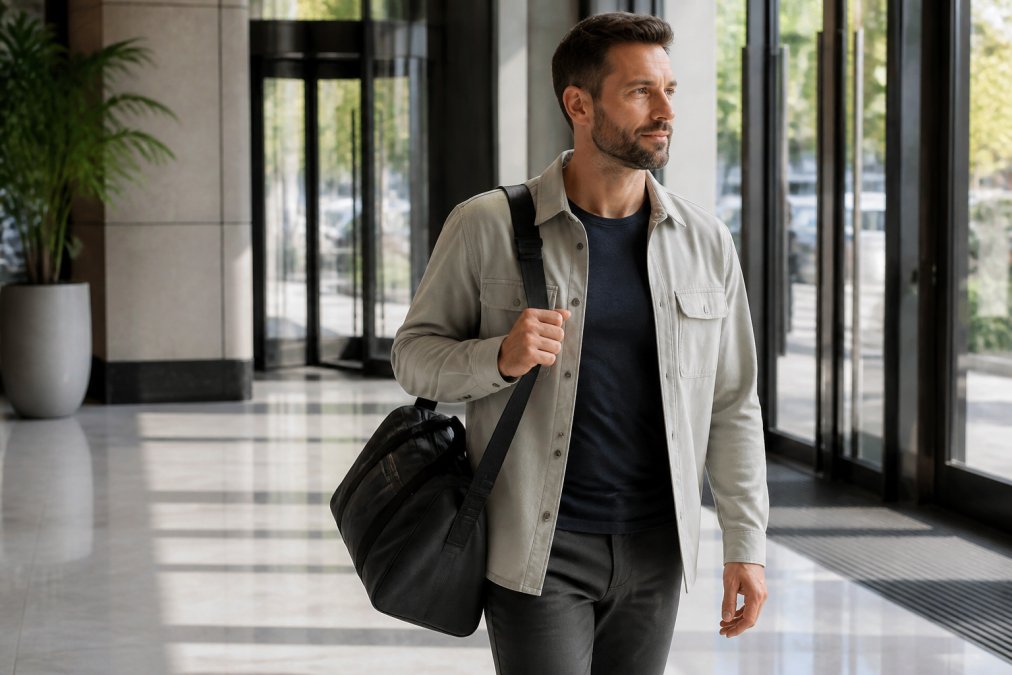
Here is the three-layer system that works in practice:
- Base layer: A fitted performance t-shirt or long-sleeve in a neutral tone.
- Middle layer: A structured overshirt, quarter-zip, or knit polo. This is what people actually see.
- Outer layer: A clean jacket or a premium sweatshirt for cold offices.
Step 3: Build a Business Casual Gym Wear Base
Business casual gym wear starts with color discipline. Stick to a neutral color palette: black, charcoal, navy, stone, and olive. These tones hide sweat, match everything, and read as intentional rather than accidental.

Your core pieces should cover three jobs:
- High-waisted leggings or jogger pants in a dark, opaque fabric
- A fitted performance tee that tucks cleanly
- Compression shorts underneath for training days
Step 4: Pick Footwear That Bridges the Gap
Footwear transition is where most outfits fall apart. Running shoes with neon accents undo everything above the ankle, and a single wrong shoe choice can make an otherwise clean athleisure outfit read as gym spillover.
The Two-Shoe System
Commute and office shoe: A minimalist sneaker in white, black, or grey, or a Chelsea boot or loafer if your office skews formal. Clean lines, no loud logos, no visible mesh, no reflective piping. Leather or matte knit uppers read more professional than engineered mesh, because mesh catches overhead light and signals performance gear.
Why the Swap Takes Ten Seconds and Saves the Outfit
The mechanism is simple: shoes anchor the formality level of everything above them. A structured overshirt over dark joggers reads business casual with a leather sneaker and reads gym-only with a chunky running shoe. Same outfit, different verdict. Swapping shoes is the cheapest formality adjustment available to you.
Sock and Color Rules That Do the Heavy Lifting
- Match sock color to trouser or legging color, not to shoe color. This lengthens the leg line and avoids the athletic-white-sock tell.
- No visible logos larger than a thumbnail. A small tonal logo is fine; a branded swoosh or wordmark across the side is not.
- Keep the sole clean. Scuffed or dirty soles read as gym gear regardless of the upper. A quick wipe with a damp cloth before you leave the gym handles this.
- Avoid visible cushioning stacks. A thick foam midsole is the single strongest athletic signal on a shoe. Low-profile soles bridge both settings.
When to Break the Rule
If your office is genuinely casual and senior leaders wear running shoes on normal days, you can wear a clean athletic sneaker all day. The test is not the shoe itself but whether anyone above you in the org chart wears something similar on a non-gym day. If the answer is no, keep the athletic pair in the bag.
Organic Premium Sweatshirt (Unisex) →
Step 5: Handle Post-Workout Hygiene and Grooming
This is the step competitors skip, and it is the one that matters most. No fabric hides a rushed transition.
Build a five-minute routine:
- Wipe down with body wipes at the gym before you dress.
- Refresh your hair with dry shampoo or a quick rinse if you have time.
- Reapply deodorant after you cool down, not before your workout.
- Blot your face and reapply light moisturizer.
- Keep a travel kit in your bag: wipes, deodorant, hair product, breath mints.
Step 6: Plan a Comfortable Athleisure Capsule for Long Work Days
Comfortable athleisure for long work days comes down to planning, not willpower. A capsule wardrobe solves the daily scramble.
Build a five-piece capsule that mixes into fifteen outfits:
| Piece | Why It Works | Wear It For |
|---|---|---|
| Dark leggings or joggers | Hides sweat, moves freely | Training and desk days |
| Fitted performance tee | Base layer, tucks clean | Every outfit |
| Structured overshirt | Signals professional | Meetings |
| Premium sweatshirt | Warmth, clean shape | Cold offices |
| Minimalist sneakers | Bridges both settings | Commute and gym |
Step 7: Respect Office Culture and Dress Code Etiquette
Dress code etiquette decides how far you can push the athleisure look, and it is the step most guides skip entirely. They tell you what to wear and never tell you how to figure out whether you are allowed to wear it. That is the gap this section fills.
The Four-Tier Dress Code Framework
Most offices fall into one of four tiers. Identify yours before you build a single gym-to-office outfit.
How to Read Your Office in One Week
Do not rely on the employee handbook alone. Handbooks describe the floor, not the ceiling. Use these four signals instead:
- Look at the most senior person in the room. Whatever they wear on a normal Tuesday is the real ceiling for everyone below them.
- Check client-facing days. If clients come in person, the dress code tightens on those days regardless of what the handbook says. Ask your manager which days are client days.
- Watch the Friday shift. Many offices relax on Fridays. If you see joggers on Friday and not Monday, that is your window.
- Note the video-call norm. If most meetings are on camera, the top half of your outfit matters more than the bottom half. A structured overshirt over a performance tee reads professional on camera even with joggers below the desk.
The Escalation Ladder
When you are unsure, do not jump straight to full athleisure. Climb one rung at a time and watch for reactions.
- Start hidden. Wear the performance base layer under fully conventional office clothing. No one sees the athletic piece.
- Swap one visible element. Replace your trousers with dark joggers, or your dress shoes with minimalist sneakers. Change one thing, not three.
- Add a structured middle layer. Introduce the overshirt or knit polo over the performance tee. This is the piece that makes the transition read as intentional.
- Go full formula. Once you have worn steps 1 through 3 without comment, the full gym-to-office outfit is safe.
When in Doubt, Overdress Once
If you cannot read the tier, overdress for one day. Wear the structured version of the outfit, note what everyone else is wearing, and adjust down from there. You will learn the real dress code faster from one day of observation than from any handbook, and you will never be the person who guessed wrong in front of a client.
Frequently Asked Questions
What are the best fabrics for gym-to-office transition clothing?
Look for performance fabrics with a matte finish rather than a shiny sheen. Moisture-wicking blends with some structure hold their shape better than thin spandex. Fabric opacity matters too: hold the material up to light before buying. A heavier weight, like the 10.3 oz/yd² organic cotton and recycled polyester blend in EVENLIFT sweatshirts, stays opaque and looks polished enough for smart casual settings.
How do you style leggings for a professional office environment?
Choose high-waisted leggings in a dark neutral color and treat them as a base layer, not the whole outfit. Add a structured middle layer such as a long overshirt or relaxed blazer that covers the hip area, then finish with clean low-profile sneakers or loafers. Avoid leggings with bold logos, mesh panels, or exposed seams. Check your office dress code first: some workplaces allow this look, others do not.
Can you wear high-performance athletic gear to a business casual office?
Yes, if the pieces read as smart casual rather than gym-only. Stick to neutral colors, matte fabrics, and clean silhouettes without loud branding. Pair jogger pants with a button-down or structured overshirt, and swap running shoes for minimalist sneakers or loafers. The goal is to keep the comfort and performance of athletic wear while matching the professional aesthetic of your workplace.
What accessories help transition gym wear into office-appropriate attire?
A structured bag, a simple belt, a watch, and clean footwear do most of the work. Swap your gym duffel for a leather or canvas tote, and add a lightweight overshirt or cardigan as a middle layer. Keep jewelry minimal and choose neutral tones. These small changes signal that your outfit is intentional, not just workout gear you did not bother to change out of.