

Table of Contents
- What Separates High Quality Athletic Apparel From the Rest
- The Best Fabric for Workout Clothes: What to Look For
- How Athletic Apparel Should Fit for Training and Everyday Wear
- Workout Clothes Stitching and Construction: What to Inspect
- How to Test Athletic Apparel Quality Before You Commit
- How to Care for Athletic Wear So It Lasts
- Matching High Quality Athletic Apparel to Your Activity
- Conclusion: Invest in Gear That Raises Your Standard
- Frequently Asked Questions
Last Updated: October 9, 2026
What Separates High Quality Athletic Apparel From the Rest
High quality athletic apparel is clothing engineered so that fabric, fit, and construction all hold up under repeated training and everyday wear. The difference between premium gear and fast fashion shows up in how it feels after fifty washes, not on the tag.
That is the core problem: athletic wear is judged in the fitting room and then lived with for a year. A shirt can look sharp on day one and turn shapeless by month three.
Signs of Quality You Can Spot in Seconds
Run your thumb across the fabric and stretch it. Quality material springs back instead of staying stretched out. Hold it to the light: if you can see straight through a training top, it will not manage sweat or provide coverage under strain. Check the seams for loose threads, and look for a weight that feels substantial without stiffness. These four checks take under a minute and catch most low-grade garments before you commit.
The Best Fabric for Workout Clothes: What to Look For
The best fabric for workout clothes balances four things: moisture-wicking, stretch, breathability, and recovery. Synthetic blends built for movement outperform plain cotton for training, while natural fibers work better for rest-day and lifestyle pieces. But "best" is not a marketing word, it is measurable, and you can measure it yourself.
Here is how the common materials compare:
| Fabric | Sweat Handling | Stretch | Best For |
|---|---|---|---|
| Polyester blend | Wicks well | Moderate | Training, running, gym |
| Nylon and elastane | Wicks well | High | Leggings, bras, yoga |
| Organic cotton | Absorbs, slow dry | Low | Rest days, casual wear |
| Recycled polyester | Wicks well | Moderate to high | Versatile training gear |
The Four Numbers That Actually Predict Fabric Quality
Most brands describe fabric in adjectives. The useful specs are numbers, and they appear on a spec sheet if you ask:
- Fabric weight (ounces per square yard, oz/yd²): Lightweight knits run roughly 4-5 oz/yd², midweight training knits around 6-8 oz/yd², and heavier fleece or compression fabrics above 8 oz/yd². A heavier knit resists the see-through problem that plagues thin leggings; a lighter weave suits hot-weather training.
- Stretch percentage: Look for 4-way stretch with at least 15-20% elastane or spandex content for leggings and bras. Below that, the fabric tends to bag at the knees and elbows.
- Recovery: Stretch a swatch and hold it for ten seconds, then release. Quality knit returns to its original dimensions within a few seconds; poor knit stays elongated or ripples.
Three Tests You Can Run in the Store
- Opacity test: Hold the fabric over a phone flashlight in a dim aisle. If you can read text through it, it will go sheer under a squat or a sprint.
- Abrasion test: Rub the fabric firmly against itself twenty times. Cheap blends pill or fuzz almost immediately; durable knits show little change.
- Colorfastness test: Dampen a white tissue and rub it across a dark or brightly dyed garment. Heavy dye transfer signals a finish that will bleed in the wash and fade within a season.
Certifications Worth Checking
Certification matters because it is a third party, not the brand, doing the verifying. OEKO-TEX Standard 100 explained confirms a fabric has been tested for harmful substances, which is a reasonable proxy for how seriously a brand treats its supply chain. For recycled content, look for the Global Recycled Standard, which requires chain-of-custody documentation rather than a vague "made with recycled materials" claim.
How Athletic Apparel Should Fit for Training and Everyday Wear
Athletic apparel should fit close enough to move with your body but loose enough that nothing restricts your range of motion. A common mistake is sizing down for a "compression" look when the garment was cut for a relaxed fit.
Check three zones before you buy. The shoulders should let you raise your arms overhead without the hem riding up past your waist. The waistband should sit flat without digging in.
Fit by Garment Type: Tops, Shorts, Bras, and Leggings
- Tops: The hem should stay put during overhead movement. A relaxed cut suits lifting; a closer cut suits running.
- Shorts: A two-way stretch short with an elastic waistband handles both gym work and errands. Our Performance Moisture-wicking Mesh Shorts use a regular fit so they move without riding up.
- Sports bras: Support level should match impact. Medium-support designs suit gym work, yoga, and training.
Workout Clothes Stitching and Construction: What to Inspect
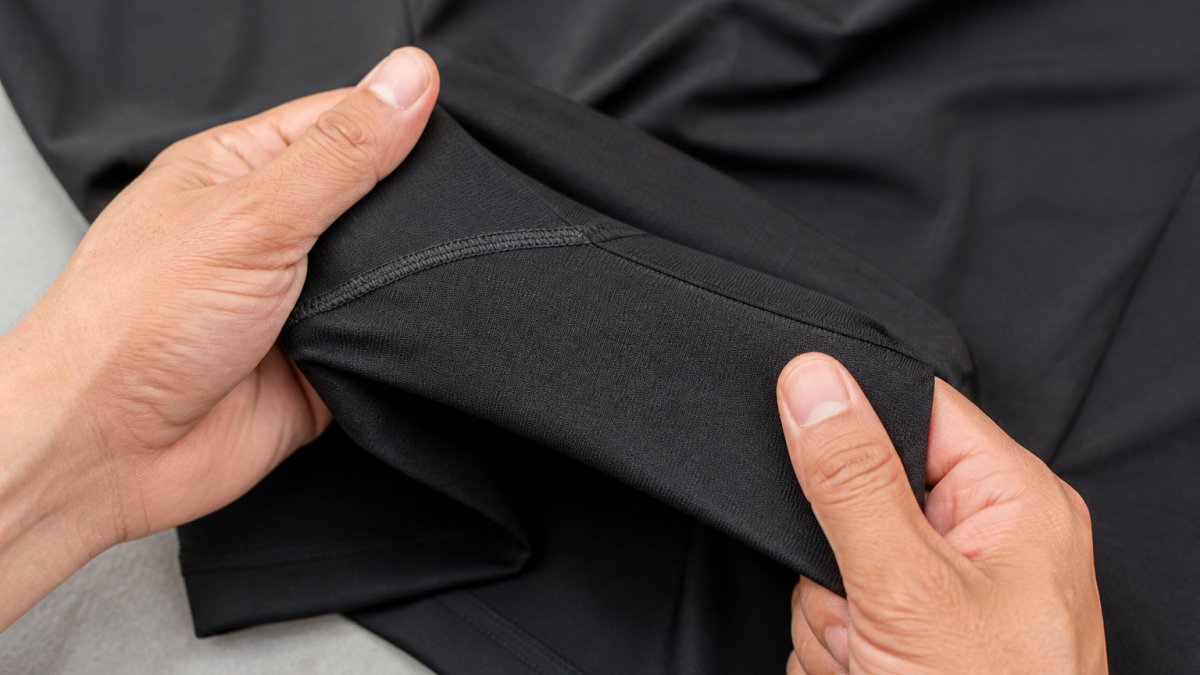
Workout clothes stitching and construction decide whether a garment survives a year of training. Flatlock seams, which lie flat against the skin, prevent the chafing that standard overlock seams cause on long runs.

How to Test Athletic Apparel Quality Before You Commit
Test athletic apparel quality with a five-minute home check before you commit to a purchase or a return window:
- The stretch-and-recover test: Stretch the fabric and release. It should snap back, not stay loose.
- The light test: Hold leggings and light tops up to a lamp. If you can read through them, they will not manage sweat or cover well.
- The seam pull: Gently tug the seams. Loose or single-stitched seams will gap.
- The pilling rub: Rub the fabric against itself. Cheap blends pill almost immediately.
- The wash check: After one cold wash, note whether the shape, color, and softness held. If they did not, the garment will not survive fifty.
How to Care for Athletic Wear So It Lasts
How you care for athletic wear determines how long it performs. Heat is the enemy of stretch fibers, so wash cold and skip the dryer. Turn garments inside out to protect the face of the fabric, and use a mesh bag for bras and lightweight tops.
Performance Moisture-wicking T-shirt (Unisex) →
Skip fabric softener entirely. One study of textile care from the American Cleaning Institute notes that following care labels is the single biggest factor in preserving fabric life.
Matching High Quality Athletic Apparel to Your Activity
Different activities demand different gear, and treating all workout clothing as interchangeable is how people end up chafing on a long run or overheating in a hot yoga class. Here is how to map features to the demands of each sport.
Running
- Priority: Lightweight, highly breathable, fast-drying fabric; flatlock or bonded seams to prevent chafing at the inner thigh and underarm.
- Look for: Fabric under 6 oz/yd², mesh panels at the back and underarms, and shorts with a liner or a gusset to reduce friction.
- Skip: Heavy cotton blends and thick waistbands that trap heat.
Strength Training and Lifting
- Priority: Abrasion resistance and a fit that does not bind at the shoulders or hips during a squat or press.
- Look for: Midweight knits (6-8 oz/yd²), 4-way stretch, reinforced stitching at stress points, and a waistband that stays flat when you hinge.
- Skip: Thin, sheer leggings that go transparent under load and loose hems that catch on equipment.
Yoga and Mobility Work
- Priority: Maximum stretch and a second-skin fit that stays put through inversions.
- Look for: High elastane content (20% or more), a high-rise waistband, and seamless or flatlock construction to avoid pressure points.
- Skip: Baggy tops that fall over your head in a downward dog and shorts that ride up.
Cycling
- Priority: Compression, moisture management, and padding where you contact the saddle.
- Look for: Tight, high-recovery knits, longer inseams to prevent saddle sores, and chamois padding for rides over an hour.
- Skip: Loose shorts that bunch and cotton that holds sweat against the skin.
Outdoor Sports (Hiking, Trail, Climbing)
- Priority: Temperature regulation, sun protection, and durability against rock and brush.
- Look for: UPF-rated fabric, abrasion-resistant weaves at the knees and seat, and layers you can add or shed as conditions change.
- Skip: Delicate knits that snag and dark colors that absorb heat on exposed trails.
The Versatility Test
For the professional who trains before work, the real test is a garment that reads as sharp in a meeting and holds up in the gym. Our Performance Moisture-wicking T-shirt uses a relaxed fit and UPF44+ protection, so it works for a lift, a hike, or a casual day. For training days that need support, our Women's Luxe Sports Bra pairs a second-skin fit with medium support, and our Women's Luxe Leggings use a high-rise, cross-front waistband that stays flat through movement.


Conclusion: Invest in Gear That Raises Your Standard
The signs of high quality athletic apparel are all readable once you know where to look: stretch that recovers, seams that lie flat, fabric that manages sweat, and a fit that moves with you.
At EVENLIFT, every piece is screened against those standards before it reaches our store. Our apparel is designed for both gym and lifestyle use, built with premium construction for durability, and offered in unisex options so anyone can build a wardrobe that works as hard as they do.
Frequently Asked Questions
How can you tell if athletic apparel is high quality?
Check four things before you buy. First, the fabric: it should feel dense but soft, with visible stretch and recovery, not thin or see-through. Second, the seams: flatlock or coverstitch construction lies flat against the skin and resists fraying. Third, the fit: it should follow your body without restricting movement. Fourth, the care label: performance fabrics hold up better with cold washing and air drying. Brands that publish fabric weight, certifications, or testing details are usually more transparent about quality than those that don't.
What fabric qualities matter most in workout clothes?
Moisture-wicking ability, stretch and recovery, breathability, and durability come first. Look for fabric weights around 4 to 6 oz/yd² for a balance of coverage and airflow. Blends with elastane or spandex move with your body and return to shape after stretching. Polyester and recycled polyester wick sweat well, while nylon blends feel softer against the skin. Certifications like OEKO-TEX 100 or GOTS signal that the material has been screened for harmful substances and, in the case of GOTS, verified as organic.
How should high quality athletic apparel fit?
Fit should support movement, not fight it. Tops should skim your torso without pulling across the chest or shoulders when you reach overhead. Shorts and leggings should stay put through squats and lunges, with a waistband that doesn't roll or dig in. Sports bras should feel snug but allow a full breath. A simple test: do five squats, five arm circles, and one deep lunge in the fitting room. If anything rides up, pinches, or restricts, size up or try a different cut.
What stitching and construction details should you check?
Turn the garment inside out. Look for flatlock seams, which sit flat against the skin and reduce chafing, or coverstitch hems that stretch without snapping. Check that seam ends are cleanly finished, not loose or frayed. Gusseted crotches in shorts and leggings improve mobility and durability. Reinforced bar tacks at stress points like waistband corners and pocket edges prevent tearing. Even stitching with consistent tension across the whole garment is one of the clearest signs of high quality athletic apparel.
How do you care for athletic apparel so it lasts longer?
Wash in cold water on a gentle cycle with similar fabrics, and skip fabric softener, which clogs moisture-wicking fibers. Turn garments inside out to protect prints and seams. Air dry when possible; if you use a dryer, choose low heat. Wash sports bras in a mesh bag to protect elastic and padding. Avoid washing heavily soiled gym clothes with delicate items. Following the care label and rotating your pieces between wears will extend their lifespan and keep performance features working.
How can you tell whether workout clothes will last through heavy training?
Look for dense fabric that doesn't thin out when stretched, seams that are sewn rather than glued, and a waistband that holds shape after repeated wear. Pilling is a warning sign: rub the fabric against itself and see if fibers ball up quickly. Fabric recovery matters too. Stretch a legging or shirt panel and release it; quality fabric snaps back without leaving a stretched-out area. Garments with certified recycled content, like those meeting the Global Recycled Standard, often go through additional quality checks.
What is the 3-3-3 rule for clothes?
The 3-3-3 rule is a wardrobe guideline rather than a quality standard. It suggests buying pieces you can wear three ways, that last at least three years, and that cost no more than three times your comfortable per-item budget. Applied to athletic apparel, it means choosing versatile pieces, like a moisture-wicking tee that works for the gym and the office, that hold up over years of washing, and that justify their price through durability and fit rather than branding alone.