

Table of Contents
- What Makes Technical Fabric Gym Wear Different
- Best Fabric for Men's Workout Clothes: Material Breakdown
- Men's Moisture-Wicking Workout Clothes: Performance Features
- Men's Stretch Gym Shorts: Fit and Mobility
- Men's Gym Clothes for Training and Everyday Wear
- How to Choose the Right Technical Fabric for Your Needs
- Care and Longevity: Making Your Technical Gym Wear Last
- Frequently Asked Questions
Last Updated: October 11, 2026
What Makes Technical Fabric Gym Wear Different
Technical fabric gym wear isn't just regular cotton with marketing attached.
Technical fabric gym wear for men pulls moisture away from your skin rather than absorbing it.
High-quality technical fabrics use tighter weaves and blended fibers that resist pilling, fading, and snags. A shirt surviving 50 washes delivers better value than cheaper alternatives that degrade after 20.
At EVENLIFT, we focus on apparel that transitions seamlessly from the gym to your professional life. The gear needs to perform during training and hold up under the scrutiny of a business environment.
Best Fabric for Men's Workout Clothes: Material Breakdown
The right material depends on your training style, climate, and how you'll wear the piece. Trade-offs matter more than marketing claims.
Polyester: The Moisture-Wicking Standard
Polyester dominates technical gym wear because it excels at moisture-wicking and dries fast. Pure polyester is lightweight, resistant to shrinking, and maintains its shape through countless wash cycles. Most performance gym wear uses polyester as the base fiber.
For strength training, polyester's quick-drying property is essential, a 100% polyester shirt dries 40-50% faster than cotton-polyester blends, critical during high-intensity interval training.
Trade-off: pure polyester feels slightly less soft than natural blends, and sheds microfibers during washing regardless of whether it's virgin or recycled.
Polyester-Elastane Blends: Stretch and Recovery
Adding elastane (also called spandex) gives the fabric stretch recovery, it bounces back after movement rather than staying stretched out.
For compound movements like squats and deadlifts, elastane is critical. A 5% elastane blend stretches 20-30% without permanent deformation, preventing bunching during deep ranges of motion.
Trade-off: elastane degrades under heat and UV exposure. Cold water and low-heat drying preserve elastane performance beyond 50 washes.
[EVENLIFT's Performance Moisture-wicking T-shirt](https://shop.evenlift.net/products/performance-moisture-wicking-t-shirt) uses 100% premium polyester with a 4 oz/yd² fabric weight, prioritizing moisture-wicking for gym-to-office transitions where stretch is less critical. The mesh shorts use a polyester-elastane blend optimized for two-way stretch during training.

Nylon: Durability and Abrasion Resistance
Nylon is less common in gym wear than polyester but offers superior abrasion resistance. If you train on rough surfaces, use heavy equipment, or wear gear that contacts metal bars or cable machines frequently, nylon outperforms polyester.
Nylon-polyester blends (50/50 or 60/40) combine nylon's durability and elasticity recovery with polyester's moisture-wicking.
Trade-off: nylon dries 15-25% slower than polyester and costs more. For strength training where durability matters, nylon-polyester blends justify the premium.
Recycled Polyester: Identical Performance, Lower Impact
Recycled polyester performs identically to virgin polyester in moisture-wicking and durability while using less energy to produce.
The Global Recycled Standard (GRS) certifies recycled content in textiles, ensuring manufacturers aren't overstating sustainability claims. When you see GRS certification on a product label, it means the recycled content has been independently verified.
EVENLIFT's Performance Moisture-wicking Mesh Shorts and Unisex Mesh Shorts both use 100% recycled polyester with two-way stretch. At $44.95 each, they deliver the same technical performance as virgin polyester while reducing environmental impact.


Trade-off: recycled polyester sheds microfibers like virgin polyester. Only natural fibers or closed-loop systems eliminate shedding.
Merino Wool and Natural Fiber Blends: Temperature Regulation
Merino wool is gaining traction in technical gym wear, especially for outdoor training and cold-weather layering. Unlike regular wool, merino fibers are fine enough to feel soft against skin and don't itch.
Merino regulates temperature by wicking in warm conditions and insulating when damp. A 50% merino-50% polyester blend suits outdoor athletes facing temperature swings.
Trade-off: merino costs 2-3 times more than polyester and requires gentler care. For gym-only training, it doesn't justify the cost; for outdoor training, it's worth considering.
Choosing by Workout Type and Climate
Strength training (gym): 95% polyester / 5% elastane or polyester-nylon blend. Prioritize two-way stretch and durability over weight.
Running and cardio: 100% polyester or polyester-elastane. Prioritize lightweight and quick-drying over structure.
Outdoor training (variable climate): Merino-polyester blend or nylon-polyester blend. Prioritize temperature regulation and abrasion resistance.
Gym-to-office transitions: 100% polyester. Prioritize neutral aesthetics and fade resistance over specialized performance.
The American Society for Testing and Materials (ASTM) standards define performance metrics for synthetic fabrics, including how well they retain shape and manage moisture. Quality manufacturers test their blends against these standards to verify performance claims.
Men's Moisture-Wicking Workout Clothes: Performance Features
Moisture-wicking is the single most important feature in technical gym wear.
Moisture-wicking fabrics pull liquid from the inner layer to the outer layer where it evaporates. Polyester's hydrophobic nature is why it outperforms cotton for sweat management.
Quality technical fabrics include antimicrobial finishes that slow bacterial growth, keeping the shirt fresher longer between washes.
UV protection is another common feature in technical gym wear. The Skin Cancer Foundation recommends UPF50+ for extended sun exposure, though UPF44+ still blocks most harmful rays.
The combination of moisture-wicking, odor control, and UV protection makes technical fabric gym wear versatile enough for gym sessions, outdoor training, and everyday wear.
Men's Stretch Gym Shorts: Fit and Mobility
The best gym shorts balance structure with freedom of movement. You need fabric that supports your body during heavy lifts but doesn't restrict your range of motion.
Performance Moisture-wicking T-shirt (Unisex) →
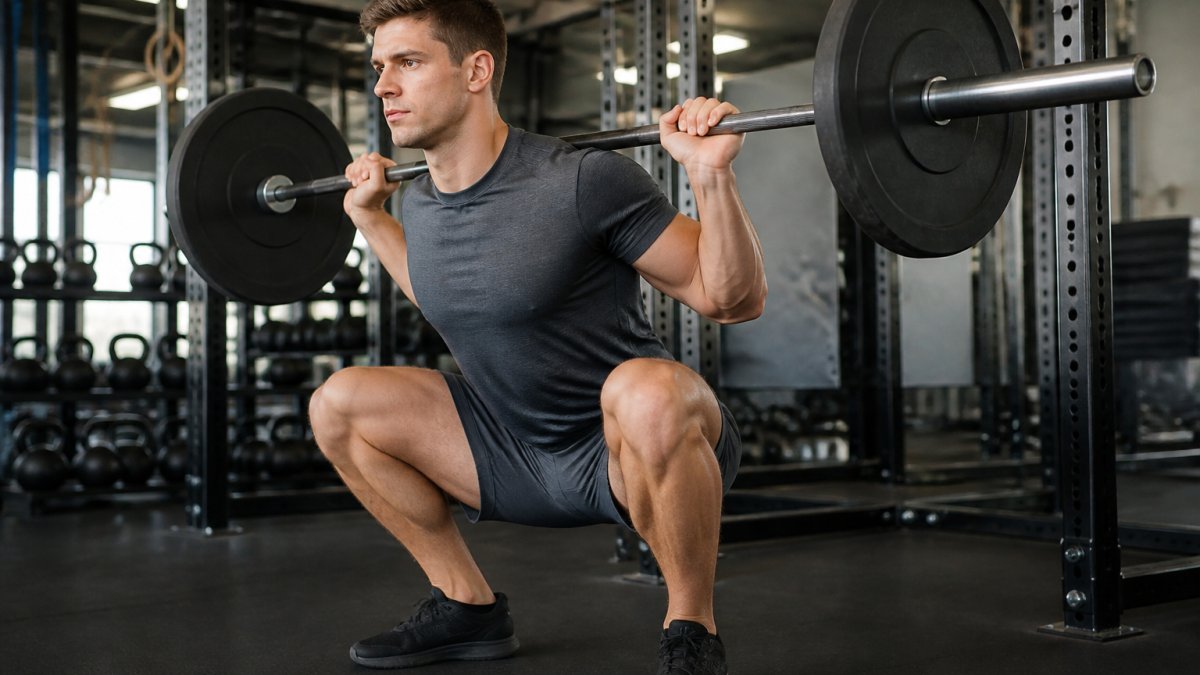
Two-way stretch moves with you horizontally and vertically, critical for squats and lunges. EVENLIFT's mesh shorts use two-way stretch construction for full mobility without pulling or bunching.
Lighter shorts (4-5 oz/yd²) dry faster and don't add bulk; heavier shorts offer more structure but dry slower. EVENLIFT's 4.42 oz/yd² weight balances durability and breathability.
Fit matters as much as fabric. A relaxed fit works for most gym sessions, but some athletes prefer a tighter cut for weightlifting.
Men's Gym Clothes for Training and Everyday Wear
The best technical fabric gym wear transitions from gym to office with neutral colors, minimal branding, and a fit that doesn't scream "activewear."
EVENLIFT's minimalist design allows the performance moisture-wicking T-shirt to work over a base layer during training or as a standalone shirt in everyday settings.
The mesh shorts' regular fit and two-way stretch transition to casual environments better than compression shorts, reducing the wardrobe pieces you need.
Durability is critical for multi-use pieces. EVENLIFT's fade and snag resistance supports a gym-to-office lifestyle.
How to Choose the Right Technical Fabric for Your Needs
Selecting the right technical fabric gym wear depends on your specific training style, climate, and how you plan to wear the pieces.
| Training Type | Best Fabric Weight | Key Feature | Why It Matters |
|---|---|---|---|
| Strength training & weightlifting | 4-5 oz/yd² | Two-way stretch, moisture-wicking | Supports mobility during heavy lifts; dries quickly between sets |
| Cardio & HIIT | 3-4 oz/yd² | Lightweight, maximum breathability | Minimizes excess fabric; prevents overheating during intense effort |
| Gym-to-office transitions | 4-5 oz/yd² | Neutral colors, minimal branding | Performs during training; looks professional in business settings |
| Outdoor training | 4-5 oz/yd² | UPF protection, moisture-wicking | Protects from sun; manages sweat in variable conditions |
| Warm climate | 3-4 oz/yd² | Lightweight, quick-drying | Prevents excess moisture buildup; maximum breathability |
Start with your primary activity. If you spend most time strength training, prioritize two-way stretch and moisture-wicking over ultralight weight. If you transition from gym to office daily, focus on fit and neutral aesthetics alongside technical performance.
Consider your climate. Lightweight fabrics work better in warm environments. If you train in air-conditioned gyms, fabric weight matters less than durability and fit.
Care and Longevity: Making Your Technical Gym Wear Last
Technical fabric gym wear requires different care than regular cotton clothing. Proper washing extends the life of moisture-wicking properties, preserves elastane stretch recovery, and prevents premature wear. Understanding the mechanics behind each care step helps you make decisions that actually extend garment life.
Water Temperature and Elastane Degradation
Wash in cold water (below 60°F) with mild detergent. Hot water breaks down elastane fibers by loosening the polymer chains that give the material its stretch. A study by the American Cleaning Institute found that washing synthetic blends in hot water (above 130°F) reduces elastane elasticity by 10-15% per wash cycle, while cold water washing shows negligible degradation over 50+ cycles.
For heavily soiled gear, use lukewarm water (85-90°F) as a compromise.
Detergent Type and Moisture-Wicking Coating
Avoid fabric softener entirely, it coats fibers with waxy residue that blocks moisture-wicking.
Use mild detergent free of optical brighteners and heavy perfumes. Standard mild detergent works as well as specialty "sport" detergent at lower cost.
Wash within 24 hours of wearing to prevent bacterial growth. Antimicrobial treatment slows growth but doesn't eliminate the need for timely washing.
Drying Method and Pilling Prevention
Dry on low heat or air dry. High heat (above 140°F) damages elastane and causes pilling, those small fabric balls that form on the surface. Pilling happens when short fibers break loose and tangle together. High heat weakens the fiber bonds, making pilling more likely.
Air drying takes 4-8 hours but preserves fabric completely. Low-heat drying (120°F) takes 30-45 minutes with minimal damage if removed while slightly damp.
For mesh shorts, air drying is worth the wait, these dry quickly anyway (4-6 hours), and extended lifespan justifies the time.
Washing Frequency and Bacterial Growth
Don't over-wash. Technical fabrics don't need washing after every wear if you're not visibly sweating heavily. Washing after 2-3 wears maintains hygiene while reducing fiber wear.
For 30-45 minutes of moderate training, one wear before washing is optional. For 60+ minutes of high-intensity training, wash after one wear to prevent bacterial overgrowth.
Bacteria thrive in moist, warm environments. Hang damp clothes in a cool, dry place or direct sunlight (UV kills bacteria) until fully dry.
Storage and UV Degradation
Store in a cool, dry place away from direct sunlight. UV exposure fades colors and degrades synthetic fibers, losing elasticity and vibrancy.
Ensure gym wear is dry before sealing in a bag or locker. Trapped moisture creates a humid microclimate where bacteria and mold grow.
Proper storage extends lifespan; improper storage degrades garments.
Measuring Performance Decline
If moisture-wicking declines, wash with white vinegar (1 cup per load) to strip residue, then return to regular mild detergent to restore performance.
EVENLIFT's mesh shorts are OEKO-TEX 100 standard certified, meaning they've been tested for harmful substances and are safe for extended wear and frequent washing. This certification gives confidence that the fabric won't degrade from proper care or leach chemicals during use.
Frequently Asked Questions
What is the best fabric for gym wear?
Technical fabrics like polyester and recycled polyester excel because they wick moisture away from skin, dry quickly, and resist odor. Look for moisture-wicking properties, breathability, and stretch recovery. Performance fabrics with UPF protection add durability and sun defense. The Performance Moisture-wicking T-shirt uses 100% premium polyester with fade and snag resistance, making it ideal for intense workouts and outdoor activities.
What should men look for in men's moisture-wicking workout clothes?
Prioritize fabric weight (4-5 oz/yd² is standard), two-way or four-way stretch, and certified moisture-wicking technology. Check for odor resistance, UV protection (UPF44+), and soft hand feel. Recycled polyester options like OEKO-TEX certified fabrics offer sustainability without sacrificing performance. Elastic waistbands and mesh panels improve ventilation during high-intensity training.
Can men wear technical gym clothes outside the gym?
Yes. Modern technical gym wear bridges the gap between performance and style. Relaxed-fit performance tees and mesh shorts work for errands, casual outings, and everyday activities. The key is choosing neutral colors and tailored cuts that transition seamlessly. Technical fabrics' durability, odor resistance, and quick-drying properties make them practical for professionals who train hard and value versatility in their wardrobe.
Is polyester or nylon better for gym clothes?
Polyester dominates gym wear because it excels at moisture-wicking, dries faster, resists wrinkles, and costs less than nylon. Recycled polyester delivers the same performance benefits while reducing environmental impact. Both fabrics offer excellent durability and stretch recovery. Polyester's odor resistance and fade resistance make it a preferred choice for serious athletes who train frequently and demand reliable performance.
How should technical gym clothes fit?
Technical gym wear should balance comfort with mobility. Relaxed or regular fit allows freedom of movement without excess fabric. Two-way stretch fabrics enable full range of motion during strength training and dynamic exercises. Elastic waistbands and tapered cuts prevent bunching. Try pieces that let you perform a full squat, overhead press, or lunge without restriction. Premium construction ensures the garment maintains its shape.